
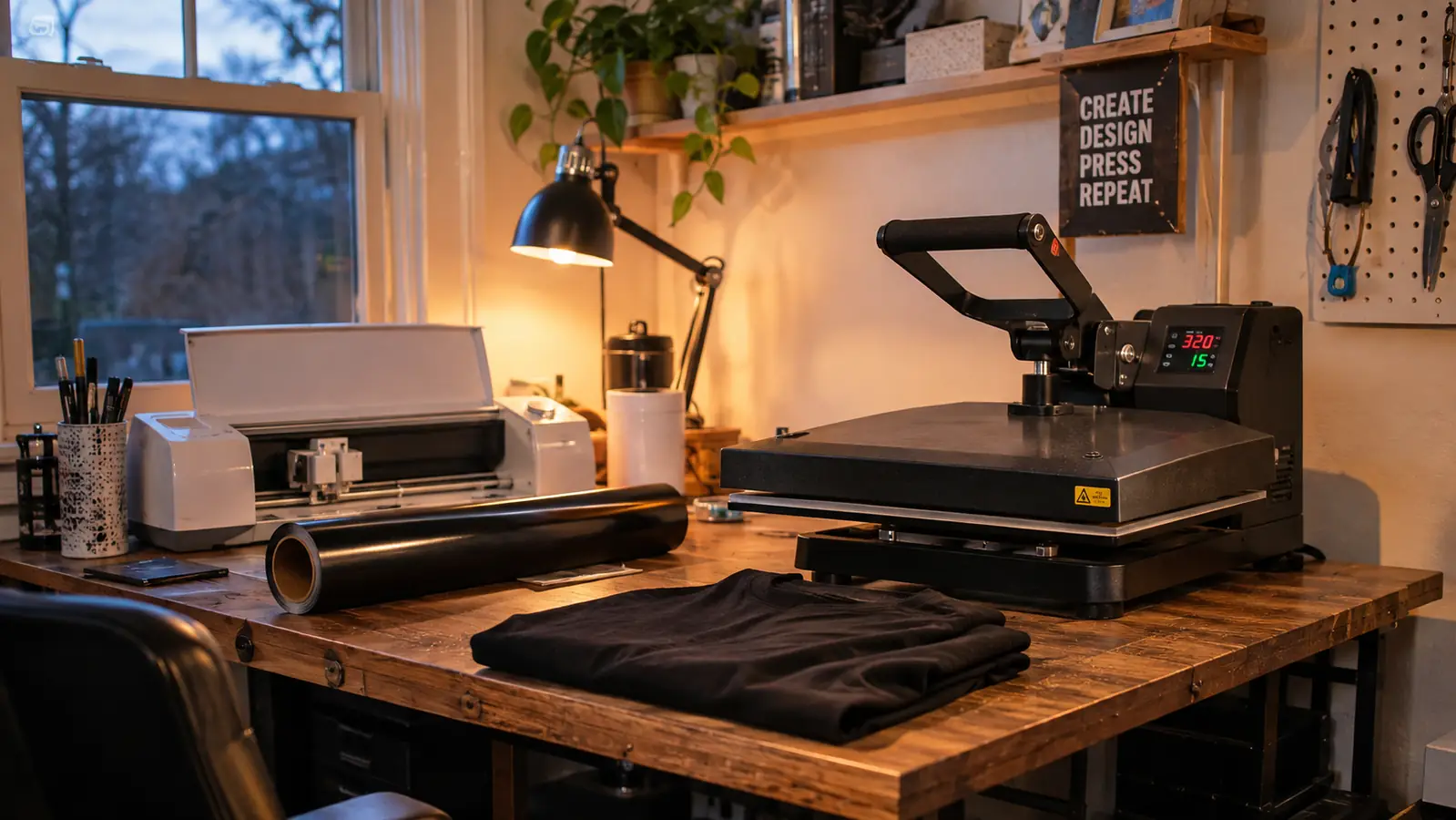
I have a Cricut I bought for greeting cards, a 15x15 press sitting on the workbench my husband Gary built in the spare bedroom, and a bad habit of cutting lettering smaller than any sensible person would. That is how this question found me. A coworker wanted a shirt with her grandson's name in two-inch letters and one small line of text underneath, and I sat there with a weeder in one hand, wondering whether the roll I keep buying is actually the easier one to work with or just the one I got used to. Siser EasyWeed is what I started on in February, and it is what I still reorder. HTVRONT is what my friend Pam keeps on her bench in her garage, and I have cut and pressed it a few times at her table. So this is not a lab test. It is nine months of one roll and a handful of evenings with the other.
Short answer: Siser EasyWeed is easier to weed, and for small lettering it is not close. The carrier holds the shape of the cut while you pull the waste away, the tight corners let go instead of tearing, and it peels hot, so the shirt comes off the press and you are already lifting the carrier. HTVRONT is easier on the budget and easier to forgive yourself for wasting, and for big one-color shapes it will do the job on a Saturday afternoon without any drama. The difference shows up in detail. Thin strokes, the little counters inside letters like e and a, a second color laid over a first one. My hands did less work with the Siser and more work with the HTVRONT, and that is the whole comparison in one sentence.
| Siser EasyWeed | HTVRONT HTV Roll | |
|---|---|---|
| Weeding small letters | Clean separation on half-inch letters, still fiddly under a quarter inch | Two letters I had to go back over, one corner wanted to lift the design |
| Peel timing | Peels hot, straight off the press, no waiting | Pam leaves hers to cool before peeling, so shirts queue up |
| Layering | One-second tack holds a second color where you line it up | Pam pre-presses her first layer longer before stacking |
| Feel on a cotton shirt | 90 microns thin, bends with the fabric | Stiffer across the chest on the shirt I have worn |
| Learning curve | Forgiving once you know your press, but you feel every wasted inch | Cheaper to ruin, so you cut the file again and shrug |
| Upfront cost | Costs more per roll, and I waste less of it | Costs less per roll |
| Roll and cutter fit | 11.8 inches by 15 feet, fits the cutting mat with almost no trimming | Goes on the same cutter the same way, nothing new to buy |
| Wash life | Nine months on my own shirts, edges still down | One shirt since March, still holding. I cannot say more than that |
| Best for | Detail work, layered designs, anything you peel hot | Big one-color shapes, practice cuts, a first roll to learn on |
How I Compared Them
I bought my Siser roll in the first week of February, the same week I bought the press, with my own money, because a few women from the office asked for shirts for a fundraiser walk. I have owned both ever since, about nine months now. Everything I say about EasyWeed comes off my own bench: the same Cricut Explore Air 2 I already had for greeting cards, the same 305 F for 15 seconds on cotton, the same teflon sheet, and the same mistakes. I cut after supper on weeknights and on Saturdays, mostly names and small logos for coworkers, neighbors and our church. None of it is fancy work. That is exactly why the weeding matters, because a name that comes off the sheet ragged still has to be worn by somebody.
The HTVRONT roll belongs to Pam. She has a bench in her garage and the HTVRONT auto press to go with it, and I have sat at her table maybe four or five evenings since spring. The rule I set for myself was that we would cut the same file on both rolls: a name in two-inch letters with a smaller line of text underneath, and one two-color design so I could feel how a second layer sat on the first. Pam cut and weeded her sheet. I cut and weeded mine. She pressed hers there and I pressed mine at home the next morning, on the same kind of cotton shirt, with a teflon sheet and my gloves on.
What I cannot give you is a nine-month wash report on the HTVRONT. I have one shirt Pam made in March that I wear to the office most weeks, and the edges are still down where she put them. That is one shirt and about eight months, and I will not stretch it into more than it is. My EasyWeed shirts have been through the wash since February, some of them every week, and the lettering on those is still sitting flat. So read the durability part of this as nine months against eight months, one bench against another, not a laboratory.
Where Siser EasyWeed Wins
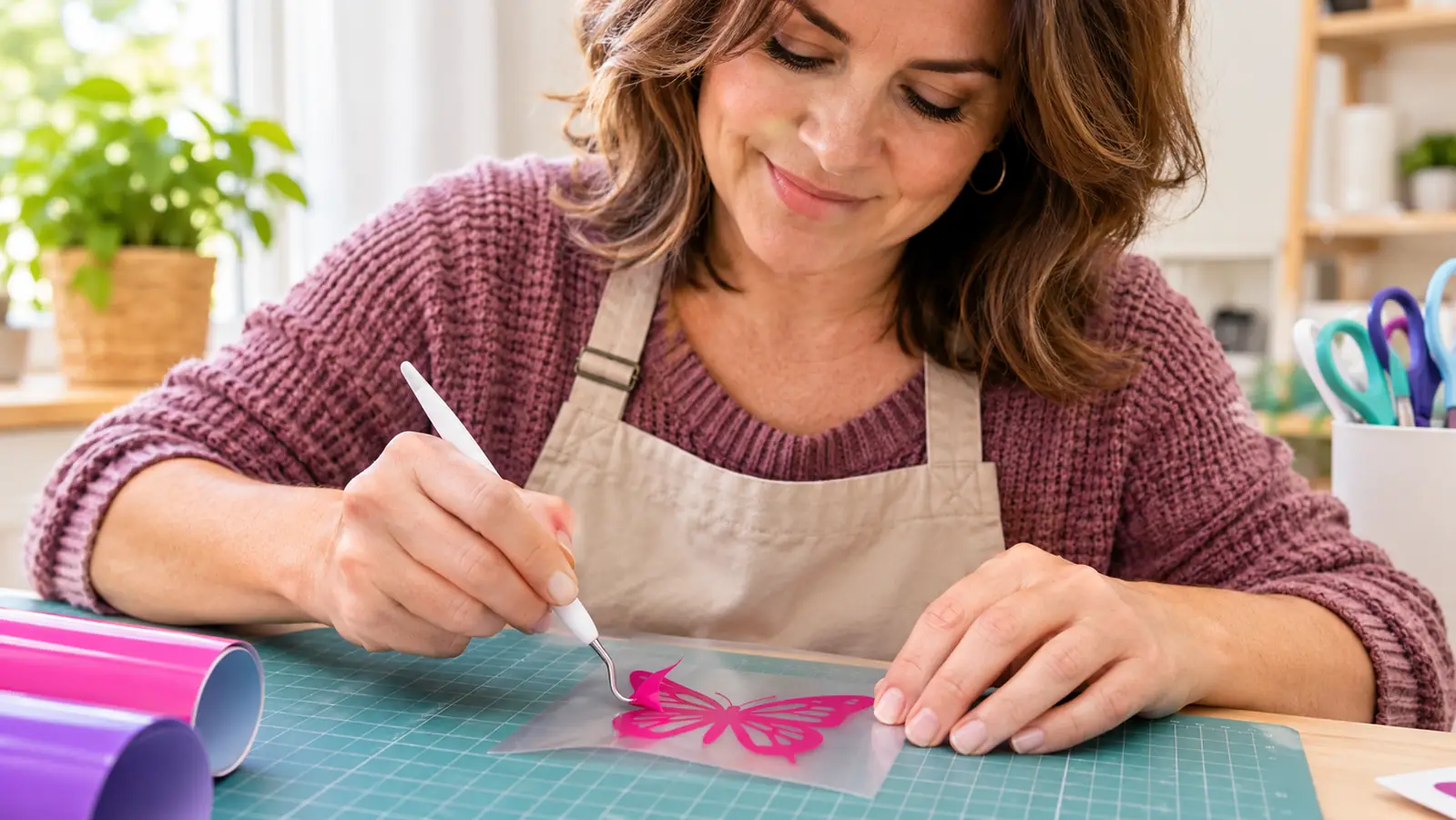
The difference shows up in the first thirty seconds, with the weeder in your hand. On the EasyWeed sheet the cut lines separated cleanly, the waste sheet lifted in one piece, and the little counters inside the letters came away when I touched the point of the hook to them instead of dragging and stretching. On the HTVRONT sheet I went back over two letters twice, and one corner of the backing wanted to lift the design up with it. Pam, who has more patience than I do, did not fight hers the way I fought mine, but she also weeds slower and checks every letter before she pulls. Under a quarter inch the EasyWeed is still fiddly for me. That is not a flaw I can pin on the roll. It is what small lettering does to anybody's hands.
EasyWeed can be peeled hot, which sounds like a small thing until you are standing over a cooling shirt. The shirt comes off the press, you set it on the table, and the carrier lifts while the design is still warm enough to lie down flat. For a two-color design there is a one-second tack, so the first layer holds the second one exactly where you lined it up, and I have stacked two layers on a shirt for the church without the bottom one sliding out from under my hand. Pam's HTVRONT sheet wanted to be left alone until it cooled, which is how she learned to work with it, so the rhythm at her table is press, set it aside, start the next one. That is a fine way to work if you have the bench space for a row of cooling shirts. My spare bedroom does not.
Two practical things keep me on this roll. It is 11.8 inches wide by 15 feet long, which fits my cutting mat with almost no trimming, so I am not measuring and re-measuring before every cut. And it is CPSIA certified, which mattered to me in the spring when a coworker asked for a shirt with her grandson's name on it and I wanted to be able to say something true about what I was putting next to a child's skin. The roll is 90 microns thin, so on a cotton shirt the design bends when the shirt bends instead of standing off the chest like a patch. Those are not romantic reasons to pick a product. They are the reasons I reorder the same thing instead of shopping around.
Where HTVRONT Wins
It costs less per roll, and that changes how you behave while you are learning. My first months with EasyWeed I treated every sheet like it was precious. I cut letters too close together and then fussed over the waste for ten minutes because I had paid for it. On a cheaper roll you cut the whole file again and shrug. If you are brand new and you know in your bones that you are going to ruin the first three attempts, there is a real argument for learning on the roll that stings less to throw away, and Pam made exactly that argument to me in her garage while I was picking at a corner.
For big one-color shapes, the weeding difference mostly goes away. A block number for a team shirt, a large name across the back, a simple shape for a tote bag. There is nothing small to fight with, so the thing my hands noticed on the detailed file did not matter on the simple one. Pam cuts big numbers and simple shapes for the orders she takes and she is not slower than I am, not by a step. If the work you plan to do is large and one color, the reason to pay more for EasyWeed gets thin in a hurry.
It also comes on a roll and goes onto the cutter the same way mine does, so trying it costs you nothing beyond the roll itself. No new mat, no new blade, no different settings to learn on the press. I want to be fair here, because I have heard people talk about HTVRONT as if it were a step down, and from Pam's bench it did not read that way. It read like a roll that does a job, priced so that a beginner can practice on it without flinching.
Where They Are the Same
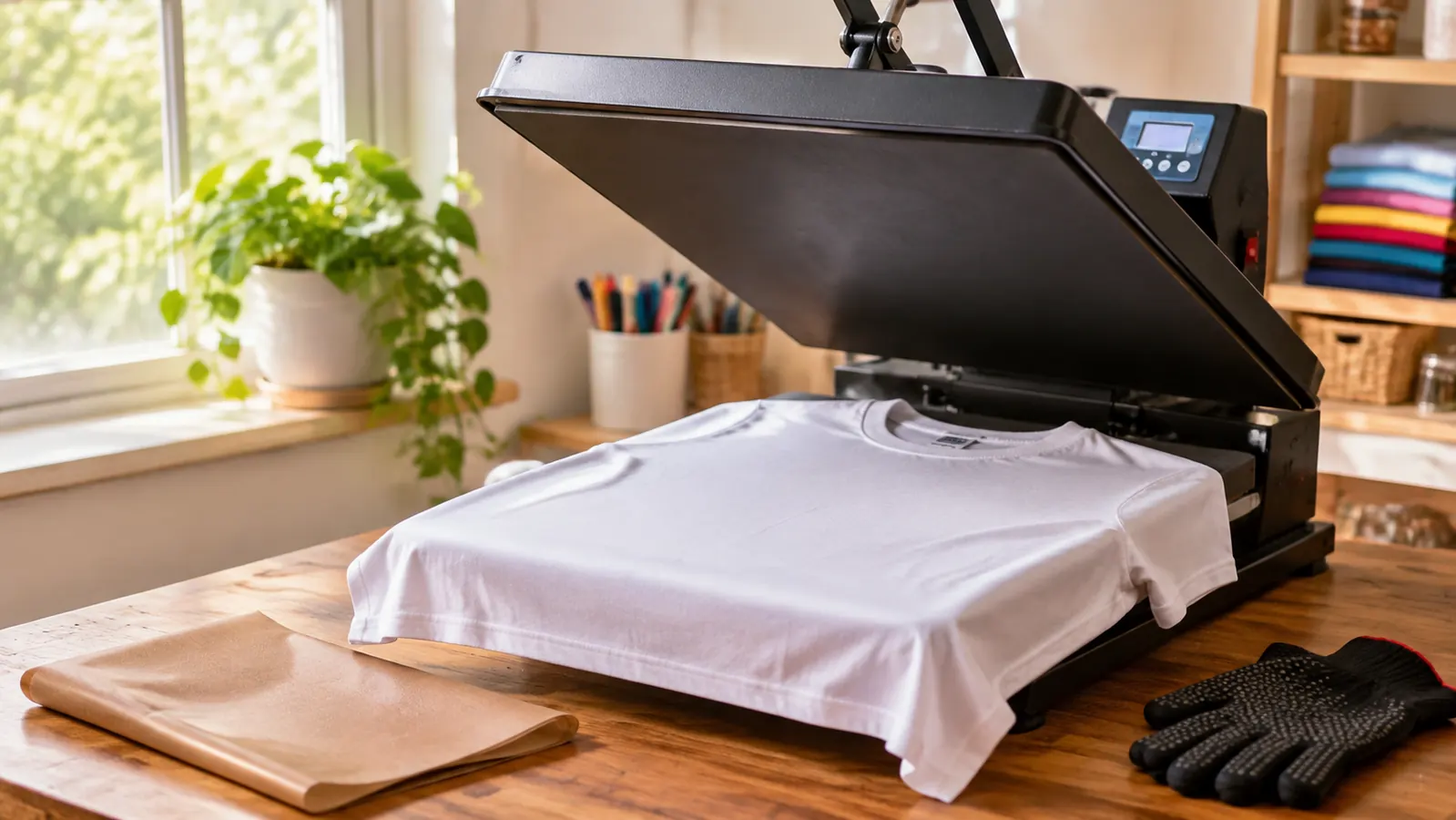
Both cut on the same machine with the same blade setting, and both go onto a cotton shirt at the same numbers I already use, 305 F for 15 seconds with a teflon sheet over the top. Neither one needs a special mat, a different blade or a second mortgage on a press. From across the table neither one reads as glossy, which is what I care about when a shirt is for somebody's grandchild rather than a costume. And both of them will teach you the same hard lesson the first time you rush, which is that a hot press does not care whose name is on the roll.
The mistakes that ruin a shirt are the same on both: too hot, too long, or peeling at the wrong moment for that material. The fix is also the same, and it costs you a scrap of the shirt you are about to press. Cut a corner off the inside hem, press your design, and pull. If the vinyl comes up with the carrier, you were too cool or too quick. If it looks melted at the edges, you were too hot. I still do it on every new blank.
Two-inch letters came away clean on both rolls. It was the small line of text underneath that decided which one I reorder.
If the small lettering is the part you dread, start with the roll I keep buying
Siser EasyWeed, 11.8 inches by 15 feet, peels hot with a one-second tack for a second layer. Nine months on my bench and still the one I reorder for names and small logos.
Amazon Check Today's Price on Amazon →Who Should Buy Which
Buy the Siser EasyWeed if your designs have detail in them. Lettering under an inch, a second color over a first, thin script for a name, anything you plan to give away or hand to a customer and want to hold up past a dozen washes. Buy it if your pressing space is the corner of a room and you need to peel and move on instead of letting shirts cool in a row on the floor. And buy it if you have already fought a cheap sheet for twenty minutes and you are tired of the fight, because the difference is the kind you feel in your hands rather than read about on a listing.
Buy the HTVRONT if you are cutting big one-color shapes, if you are on your first roll and want room to practice, or if you already press cold and set pieces aside to cool anyway. Pam's work looks fine. I have worn one of her shirts since March and it has held. The place I would not choose it is a small, detailed file, and I know that is a narrow line to draw, but it is the line where I noticed the difference every single time I sat down with both rolls in front of me.
If you can manage it, keep both. I know that is not what anyone wants to hear while standing in a store aisle deciding. But one roll for the detailed work and one roll to test files on is how I would set up a bench from scratch, and it is roughly what happens at Pam's table now, since I bring my own sheet when a design has lettering in it and she keeps the other for the big simple shapes. That is not a rule anybody handed me. It is just what two women with one press each ended up doing after a spring of evenings.
The roll that made small lettering less of a fight
Siser EasyWeed in an 11.8 inch by 15 foot roll, CPSIA certified and 90 microns thin, still the one I reach for when a design has a name and a line of small text under it.
Amazon Check Today's Price on Amazon →