
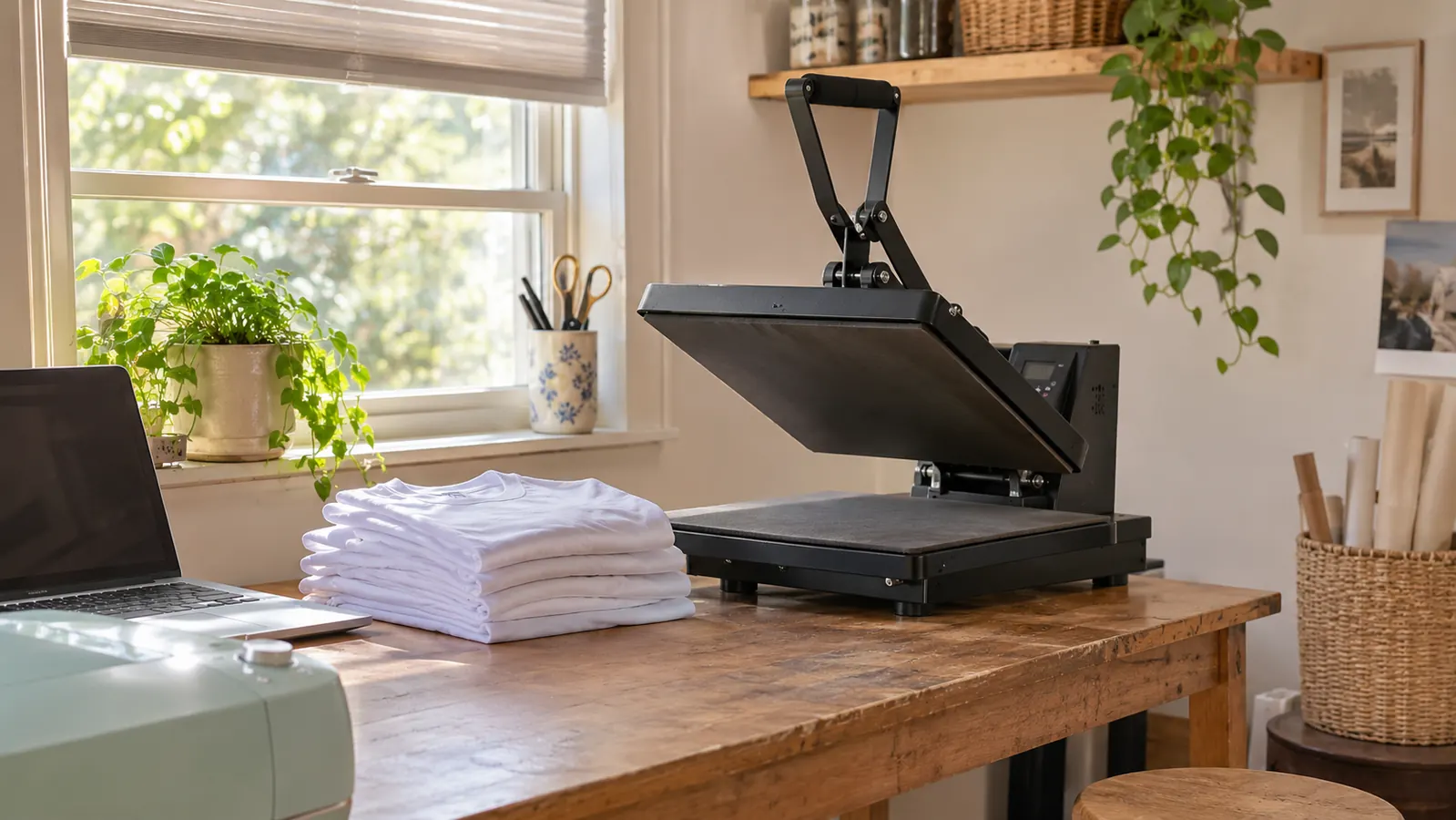
The first shirts I made lifted in the wash. Not the whole design at once. One corner came up off a cotton tee after the second trip through the laundry, and then the rest of it followed. That was December, before I owned a press, back when I was standing at the kitchen table with a shirt I had cut on my Cricut and a video I had watched twice.
The shirt looked fine when I handed it over. That is the part that bothers me. It looked fine, so I did not know anything was wrong until a coworker mentioned it a few weeks later, kindly, the way people do when they do not want to embarrass you.
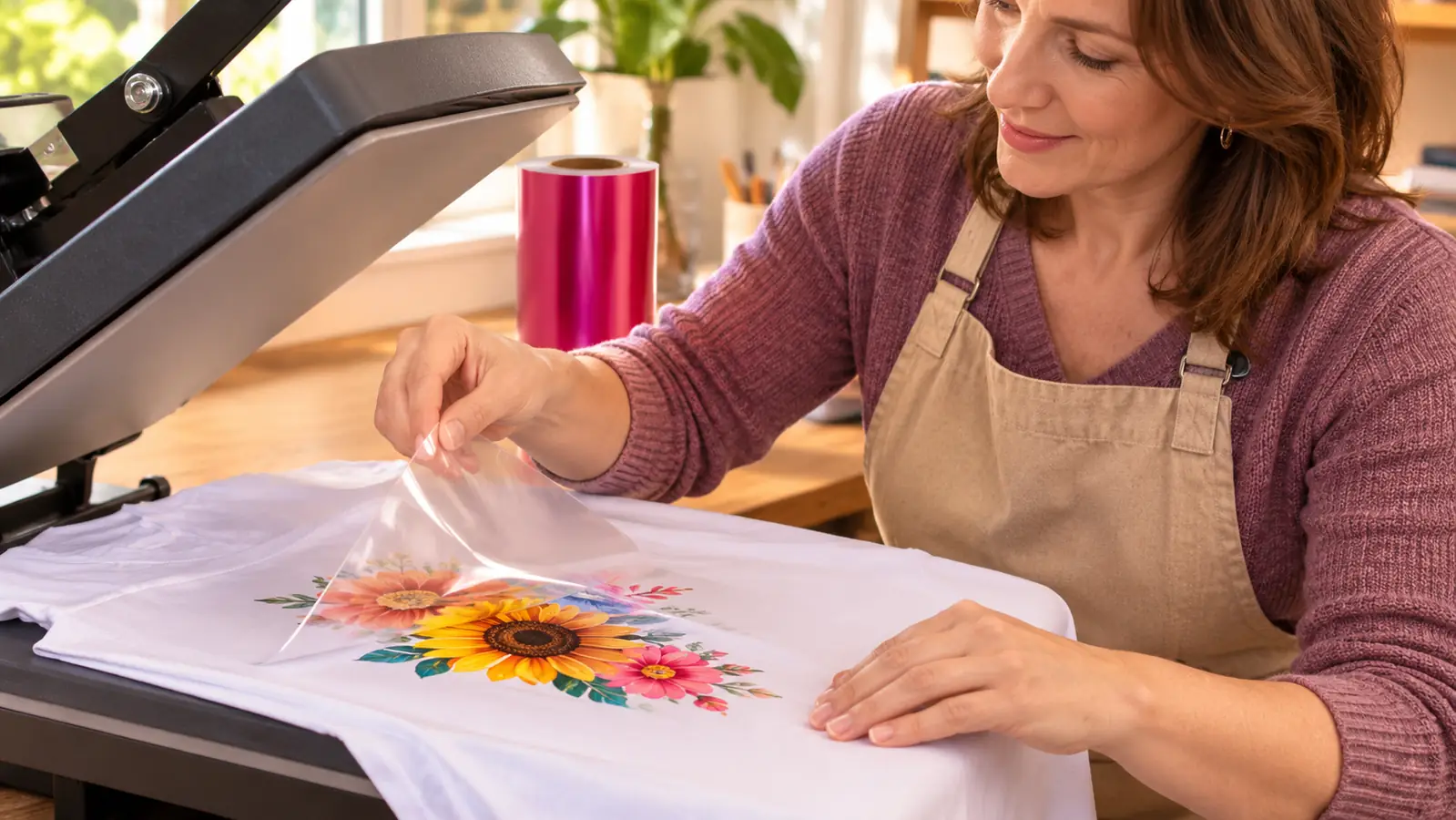
In the first week of February I bought a Fancierstudio 15x15 clamshell press and a roll of Siser EasyWeed in the same order, with my own money, from Amazon. Coworkers at the dental office where I work had asked for shirts for a fundraiser walk, and I was not going to hand out anything that came apart in a washer again.
Nine months on, that roll is still the thing I reach for most, and not because it is fancy. It is because Siser EasyWeed does the jobs sublimation cannot touch. Sublimation wants polyester or a coated blank. Cotton will not take it, and a dark shirt will not take it either, no matter what the settings say or how long you hold the press down. So when a coworker wants a cotton tee with a logo across the chest, vinyl is the answer, and this is the vinyl I grab.
My settings have not changed since February. 305 degrees, 15 seconds, peel hot. I do not wait for the shirt to cool. The carrier comes off warm and the design stays where I put it. That one habit fixed most of what was wrong with my December shirts, and it cost me nothing to change.
305 degrees, 15 seconds, peel hot. The carrier comes off warm and the design stays where I put it.
The Roll That Covers Every Shirt Sublimation Can't
Siser EasyWeed is what I press on cotton, and it is the roll I reorder when it runs out. Peel hot, no cooldown, and it tacks in about a second when you need a second layer on top.
Amazon Check Today's Price on Amazon →Now the honest part. Small letters in EasyWeed are fiddly to weed, and I say that as someone who cuts a lot of small lettering for the walk shirts and the church directory list. Anything under about half an inch, I slow down, use a sharp hook and put a lamp right over the table. Thin lines want to stretch if you pull fast. That is not a defect in the vinyl. It is what cutting something 90 microns thin feels like, and it is also why the design lies flat on the shirt instead of sitting up on the fabric like a patch.
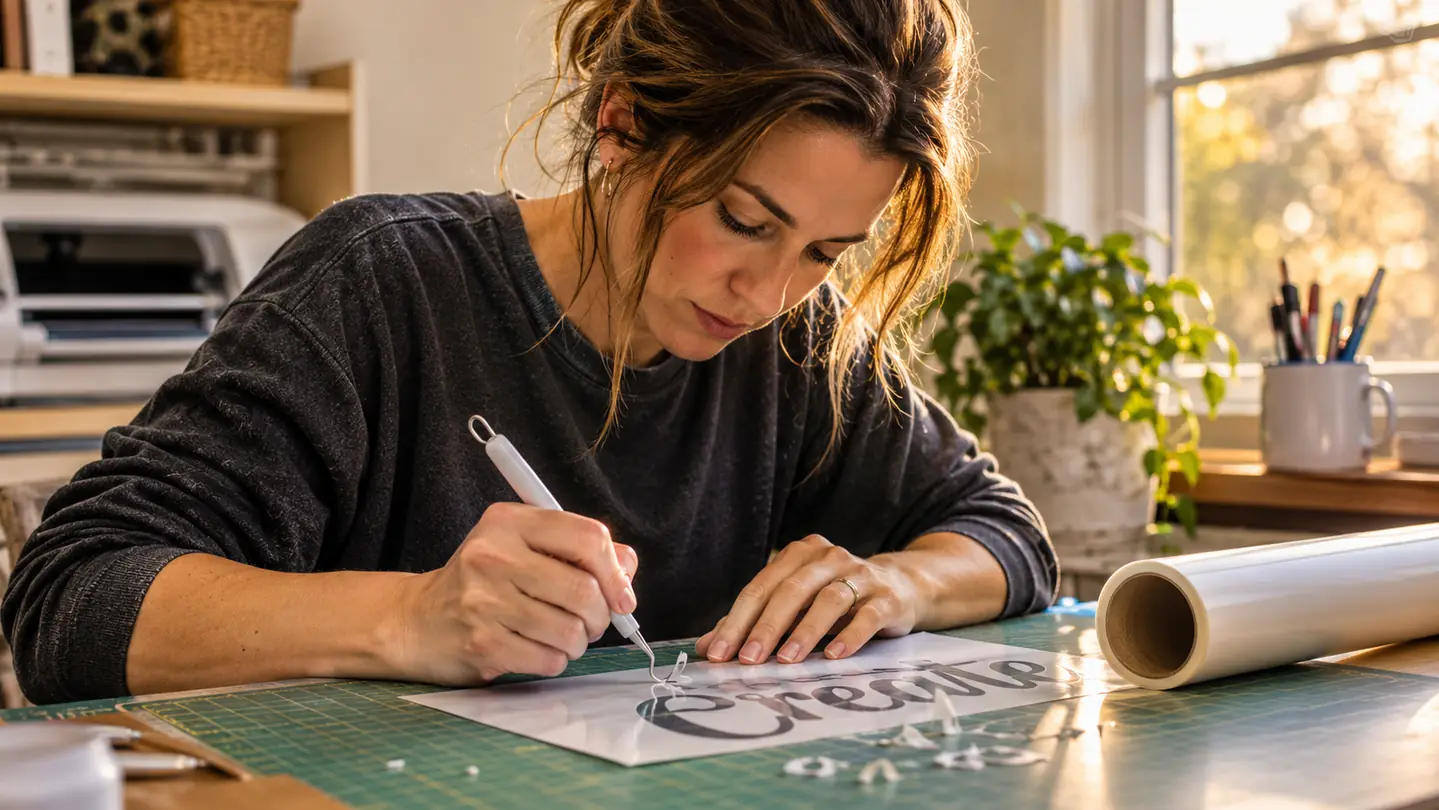
The roll I keep is 11.8 inches wide by 15 feet, which fits my cutting mat with a little room to spare and gets me through a season of shirts. I cut it on the Cricut Explore Air 2 I already owned for greeting cards, at the same folding table by the window where the printer sits. The only care it needs is staying off the floor, because a roll that picks up lint will press that lint straight into the shirt.
The 1-second tack is the feature I did not expect to use and now use every week. When I stack a second layer, I press the first for a second or two, pull the carrier, lay the next piece down, and check it against the shirt seam before I commit to a full press. My clamshell opens toward my hands, so I press with care and gloves anyway. That extra second of forgiveness means a beginner can straighten a crooked placement instead of cutting a new design and starting over on a fresh blank.
The other thing worth saying is how it wears. 90 microns is thin enough that a name across a shirt does not feel like a sheet of plastic taped to the fabric, and the walk shirts have been through the wash a dozen times and still read clean. The listing also notes CPSIA certification, which I check for now, because several of the people I press for have grandchildren and I would rather know than guess.
What I'd Tell You If We Were Sitting at My Kitchen Table
Buy one roll of a brand you can name instead of three cheap rolls you cannot. I spent a December with vinyl I could not identify now even if you paid me, and the only lesson in it was that a cheap roll costs you a shirt and an evening and a little of your confidence. Siser EasyWeed is the one I reorder, and I reorder the same product every time so I am not relearning my press settings with every batch. If you want the longer version of how it holds up, I wrote up my hands-on review of the same roll, and I also compared how EasyWeed compares to the HTVRONT roll I have only tried at my friend Pam's bench.
Press somewhere that is not your kitchen table. I press in the spare bedroom on the bench my husband Gary built, with the window cracked open, and I have never once set up in the kitchen or the garage. Heat, fumes and food do not belong in the same room, and a folding table by a window will do fine if that is what you have. Check your press with an infrared thermometer, because the display on mine reads a little off and I would rather find that out on a scrap than on a stack of shirts. Then press the scrap. Every new blank, every new roll, one scrap first, then the good shirt.
One Roll, One Setting, and Shirts That Survive the Wash
Siser EasyWeed at 305 degrees for 15 seconds, peeled hot. That is the entire method I use on cotton, and it has held up through a full season of fundraiser shirts.
Amazon Check Today's Price on Amazon →