
Last December I made Christmas shirts for the women I work with using a household iron and a roll of craft store vinyl. They looked fine on the kitchen table. Two washes later the corners were lifting, and one design had folded itself in half inside the dryer. I threw the rest of that roll away and decided that if I was going to keep making shirts, I needed to do it properly.
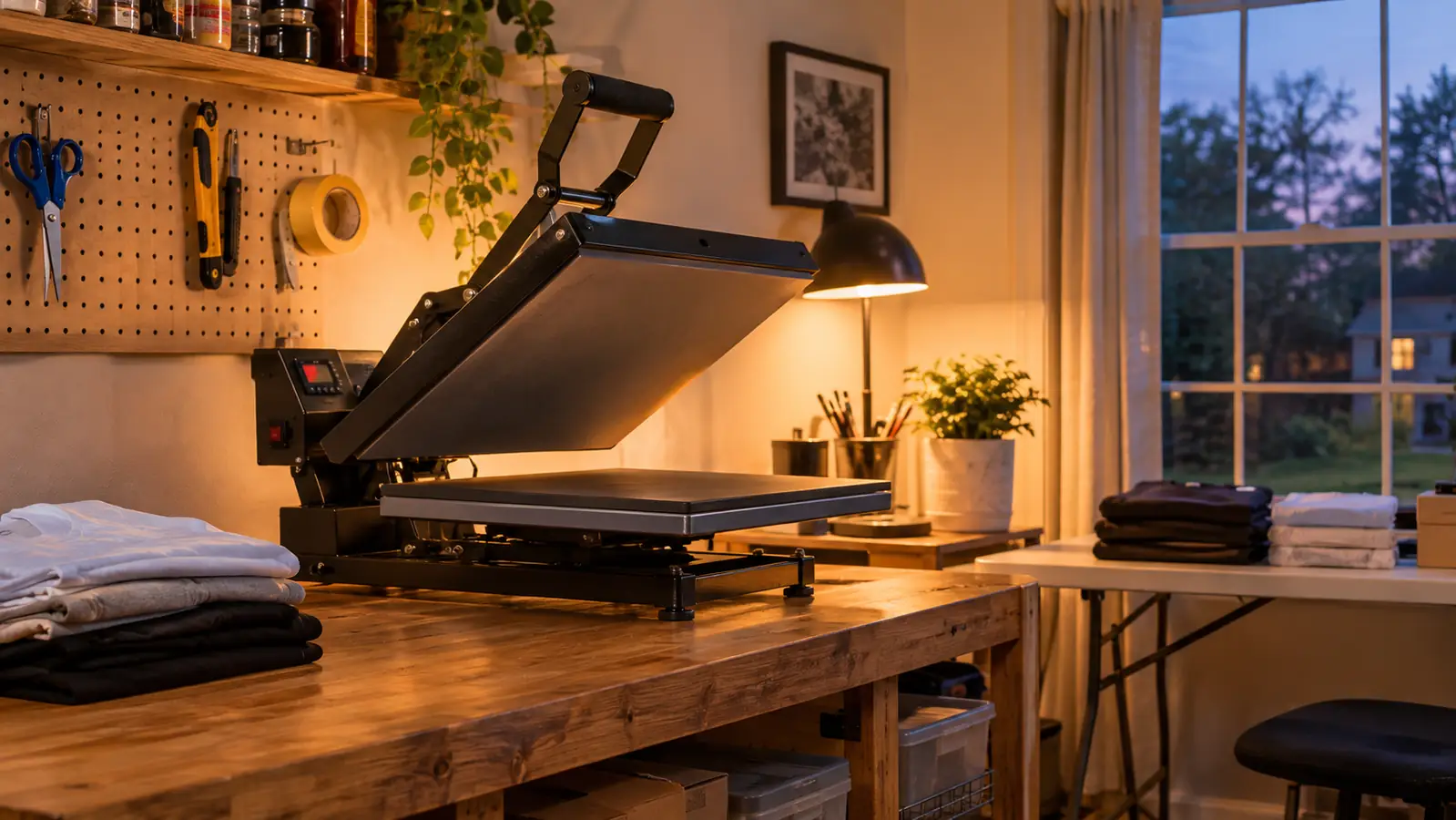
In the first week of February I bought two things at once, with my own money, off Amazon: a Fancierstudio 15x15 clamshell press and a roll of Siser EasyWeed heat transfer vinyl. The shirts that started it were for a fundraiser walk our dental office was doing, and I did not want to hand people something that came apart the first time they washed it. That was about nine months ago. The press is still on the workbench Gary built in the spare bedroom, and I am still ordering the same Siser roll. Here is what nine months of evenings and Saturdays taught me about it.
The Quick Verdict
Thin, clean to weed by hand, and it peels hot with no cooldown wait. The complaints are small: tiny letters still take patience, and the white roll shows every fingerprint.
Amazon Check Today's Price →The roll I keep reordering for cotton shirts
11.8 inches wide by 15 feet, cut on a Cricut Explore Air 2 and pressed at 305 F for 15 seconds. If your shirts are cotton, or any dark color, this is the material that does the job in my spare bedroom.
Amazon Check today's price on Amazon →How I've Used It
My setup is not fancy, and I think that matters for a review like this. I have one Windows laptop, a Cricut Explore Air 2 that I bought for greeting cards years before any of this started, and the press on the workbench. The Siser roll stands on its end on a shelf under the bench, still in the sleeve it came in. I cut on a standard mat and I weed at the workbench with a hook and a pair of tweezers. That is the whole operation.
Most of what I press is cotton. Plain cotton shirts in whatever color someone asks for, which around here means navy, black, or a dark green for the church group. That is deliberate. Sublimation only works on light colored polyester, so anything cotton or anything dark comes over to the vinyl side of the bench. Siser EasyWeed has handled that half of the work since February.
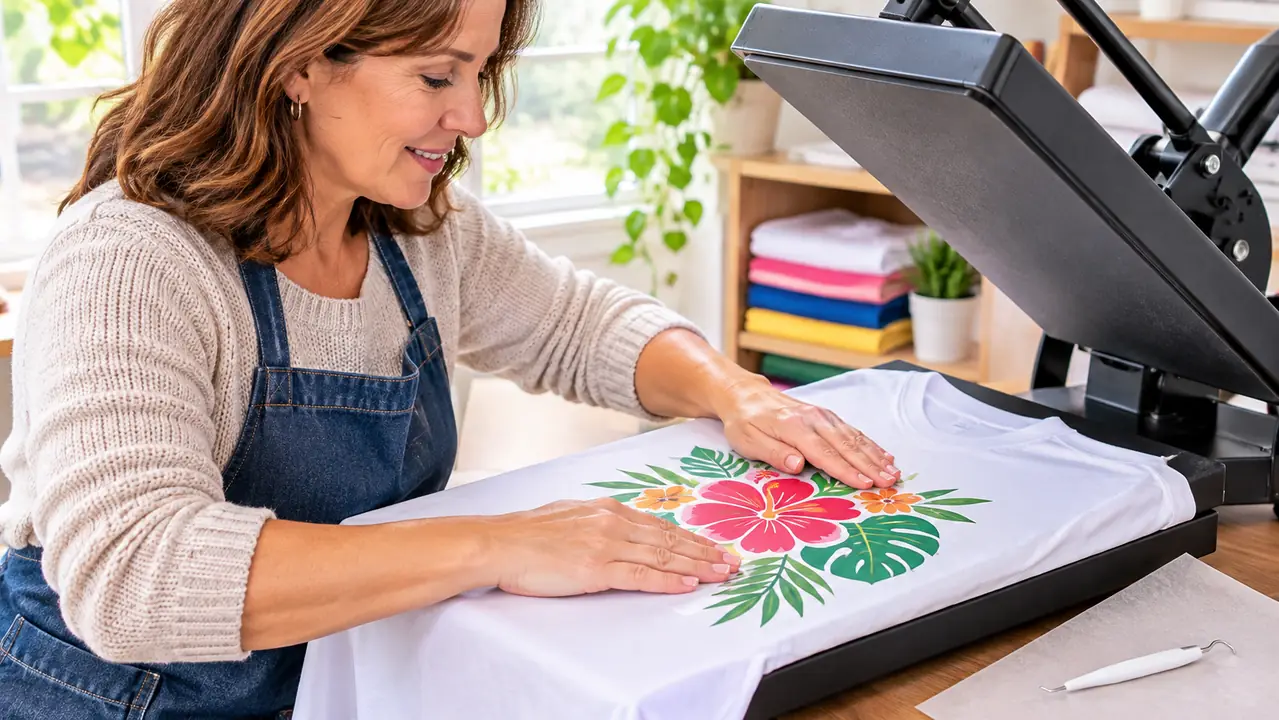
My settings have not changed since the first week. 305 F, 15 seconds, firm pressure, and I peel while the shirt is still hot. I put a teflon sheet over the design and a piece of butcher paper under it when there is a seam or a placket in the way. Before the first press of the evening I check the platen with a cheap infrared thermometer, because the display on the press can drift a few degrees and I would rather find that out before I ruin a shirt front.
The work itself has been small. Shirts for coworkers, a few for neighbors, a set for the church youth group, and one fall craft fair where I sold shirts off a folding table next to Pam, who has a bench in her own garage. Nothing about this is a business for me. It is evenings and Saturdays in a spare bedroom, and the vinyl has to work the first time because I do not get a second Saturday.
Cutting It: What the Roll Is Like to Work With
The roll is 11.8 inches wide and 15 feet long, and both numbers matter more than they sound. The width fits inside the cutting area of my Cricut with room left over, so I am not trimming a sheet down before every cut. The length means I can cut a dozen shirt fronts before I have to think about ordering again. When I was buying individual sheets at the craft store, I was always running out halfway through a batch and driving across town on a Tuesday night.
You load it with the carrier sheet facing up, which means the design has to be mirrored before it goes to the cutter. That caught me exactly once, back in February, and I noticed before the blade went down. Now flipping the design is the first thing I do when I open a file, before I even pick a mat.
The material is 90 microns thin, which I did not think about until a friend handed me a few sheets of a thick, gummy vinyl to try. That stuff felt like a patch sitting on the shirt. Siser cuts cleanly on a standard cut with the medium blade, and the carrier sheet stays flat after it comes off the mat instead of curling up at the corners. That sounds like a small thing. It is the difference between a straight cut and a crooked one, because a curled carrier catches on the housing as it feeds.
One cutting note for anyone planning a big design. If a design is wider than 11.8 inches it will not go through in one piece on this roll. I split those into two cuts and line them up on the shirt by eye, which works because I am working with simple shapes and block lettering. If you want a full back print in a single pass, the width here will stop you and you should know that before you buy.
Weeding: Where the Patience Goes
Weeding is the part of this hobby nobody warns you about. You sit with a hook and pull the negative space away from the letters, and on a name in a script font that means digging the middle out of every O and A. Siser weeds well. The cuts separate cleanly and the small inside pieces lift out without dragging the letter beside them. That is most of what you are paying for when you buy a name brand instead of a bargain roll.
Small letters are still fiddly and no vinyl on the market changes that. A three-quarter inch name for a shirt pocket takes me about twenty minutes. What Siser gives me is a clean edge on those small letters. The craft store vinyl I used in December frayed at the corners when I weeded it, and those frayed corners are exactly where it lifted after the first wash.
An honest gripe. I buy the white roll most often because white is what shows up on the dark shirts, and white shows every smudge, every fingerprint, and every bit of lint that lands on the carrier. I wash my hands before I start and I keep the roll in its sleeve. That is a complaint about the color and not about the vinyl, and it is the only cosmetic issue I have run into.
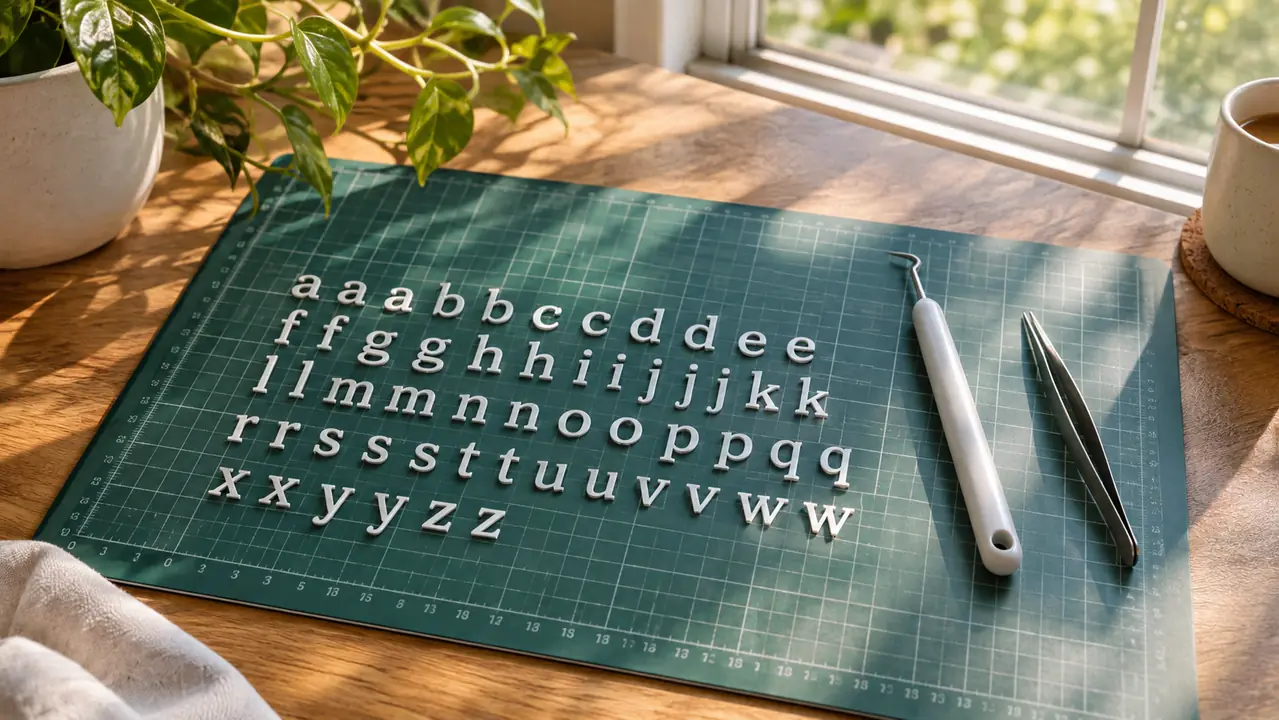
The other thing I would tell a beginner is to weed on a clean surface with good light. I use a cutting mat by the window in the afternoon. Losing a small letter against a dark table is how you end up hunting for it after the shirt is already pressed and the carrier is in the trash.
Pressing: 305 Degrees, 15 Seconds, Peel Hot
The best thing about EasyWeed is the hot peel. I press for 15 seconds at 305 F, lift the press, and pull the carrier off while the shirt is still warm enough that I want a glove on. There is no cooldown wait. When you are pressing a stack of shirts on a Saturday morning, that wait is the difference between finishing before lunch and finishing at three in the afternoon. It is the single reason I stopped dreading batch days.
For two-color designs the 1-second tack is what saves me. I press the bottom layer for a second or two just to hold it in place, then lay the top layer over it and press the whole thing for the full 15 seconds. The bottom layer does not shift. That is what keeps a two-color design from sliding.
After the peel I put the teflon sheet back over the design and give it a short second press, maybe five seconds, just to seat the edges. I cannot tell you the manufacturer requires it. I can tell you that my corners stay down with it.
Pressure matters as much as temperature, and it is the part a beginner is most likely to get wrong. The clamshell has to close firmly enough that you can feel it, not so hard that the press strains. If the carrier comes off and the design looks dull instead of sharp, my pressure was light. If the shirt has a shine where the platen sat, it was heavy. I check both on a scrap piece before I press a new shirt color.
How It Has Held Up
The fundraiser shirts went out in February. I see those people five days a week, so I hear about it when something goes wrong, and nobody has come back to me with a peeled letter. The shirt I kept for myself gets washed every week in cold water, inside out, and dried on low. Nine months in, the design has cracked slightly along the fold where it creases at the bottom of the placket. That is the only wear I can point to.
The shirts I have treated worst are the ones I wear to the craft fair in the fall, because those get folded into a tote bag and sat on. Same story. The vinyl is still stuck and the edges are still down. What has aged is the shirt, not the design.
I have not had a roll with a bad carrier sheet, a wrinkle, or a section that would not weed. I buy the same 11.8 inch by 15 foot roll every time, and I have not found a reason to try anything else for cotton.
Compared to What I Used Before
The craft store vinyl from December is the only other heat transfer vinyl I have owned, and I do not remember the brand. It was thicker, it frayed when I weeded small letters, and it lifted at the corners after two washes on a shirt pressed with an iron. Some of that was the iron. Some of it was the vinyl. Either way, I am not going back to it.
Pam, my friend with the bench in her garage, uses an HTVRONT roll, and I have tried it at her house a few times. It cuts and weeds fine, and I would not turn it down if it were what I had in front of me. The difference I noticed is in the peel. Hers wants a few seconds of cooling before the carrier comes off cleanly, and I have gotten spoiled by pulling mine hot. That is a preference, not a flaw in her roll.
The bigger comparison is not vinyl against vinyl. It is vinyl against sublimation. Everything I make in a light color on polyester goes to the Epson and the tumbler press. Everything cotton, everything dark, comes here. Once I split the work that way, the whole spare bedroom got calmer. Siser EasyWeed is the vinyl half of that split, and I have not had to rethink it.
What I Liked
- Peels hot, so there is no cooldown wait between shirts
- 1-second tack holds a bottom layer in place for two-color designs
- Cuts cleanly on a standard Cricut setting and the carrier stays flat after it leaves the mat
- 90 microns thin, so a large design does not feel like a patch on the shirt
- CPSIA certified, which matters when a shirt is going to a child
Where It Falls Short
- Small letters and script fonts still take about twenty minutes of weeding by hand
- The white roll shows every smudge, fingerprint and bit of lint on the carrier
- You have to remember to mirror the design before cutting
- A design wider than 11.8 inches has to be split into two pieces
The shirts I pressed in February for the fundraiser walk have been through the wash every week since, and not one letter has come off.
Who This Is For
If you own a heat press and you want to make cotton shirts, this is the roll I would put in your hands. It is forgiving on a home cutter, it peels hot, and it does not ask you to learn a new set of settings. For a beginner that matters more than any spec sheet, because the two places a first batch usually goes wrong are a messy weed and a carrier pulled too early. This roll takes both of those out of the equation.
It is also the answer for dark shirts. Black, navy, forest green, the team color, whatever it happens to be. Sublimation will not touch those, and a dark shirt with a light design is the most common thing anyone asks me for.
And it suits someone who wants one material they can learn properly instead of five they sort of understand. I have one roll of Siser, one press, one set of numbers, and I stopped making mistakes the week I stopped changing variables.
Who Should Skip It
If everything you make is light colored polyester, you do not need this roll. That is sublimation work, and the vinyl would sit on your shelf until it went stale.
If your whole order is two-inch logos with fine detail and tiny text, you are going to fight the weeding on any vinyl, and a thinner specialty product may suit you better than a general purpose roll. I would not want to weed a paragraph of small type in any brand, and I would not buy this one expecting it to be different.
And if you want one material that handles every blank in the house, including tumblers, hats and anything with a curve, this is not it. This is a cotton and dark-shirt tool in my spare bedroom, and that is the job it does well. I keep the tumbler press on the other table for a reason.
If your shirts are cotton, start with this roll
11.8 inches by 15 feet, 90 microns, hot peel at 305 F for 15 seconds. It has been on my bench since February, through a fundraiser walk, a church group order and one craft fair, and it has not given me a reason to switch.
Amazon Check today's price on Amazon →