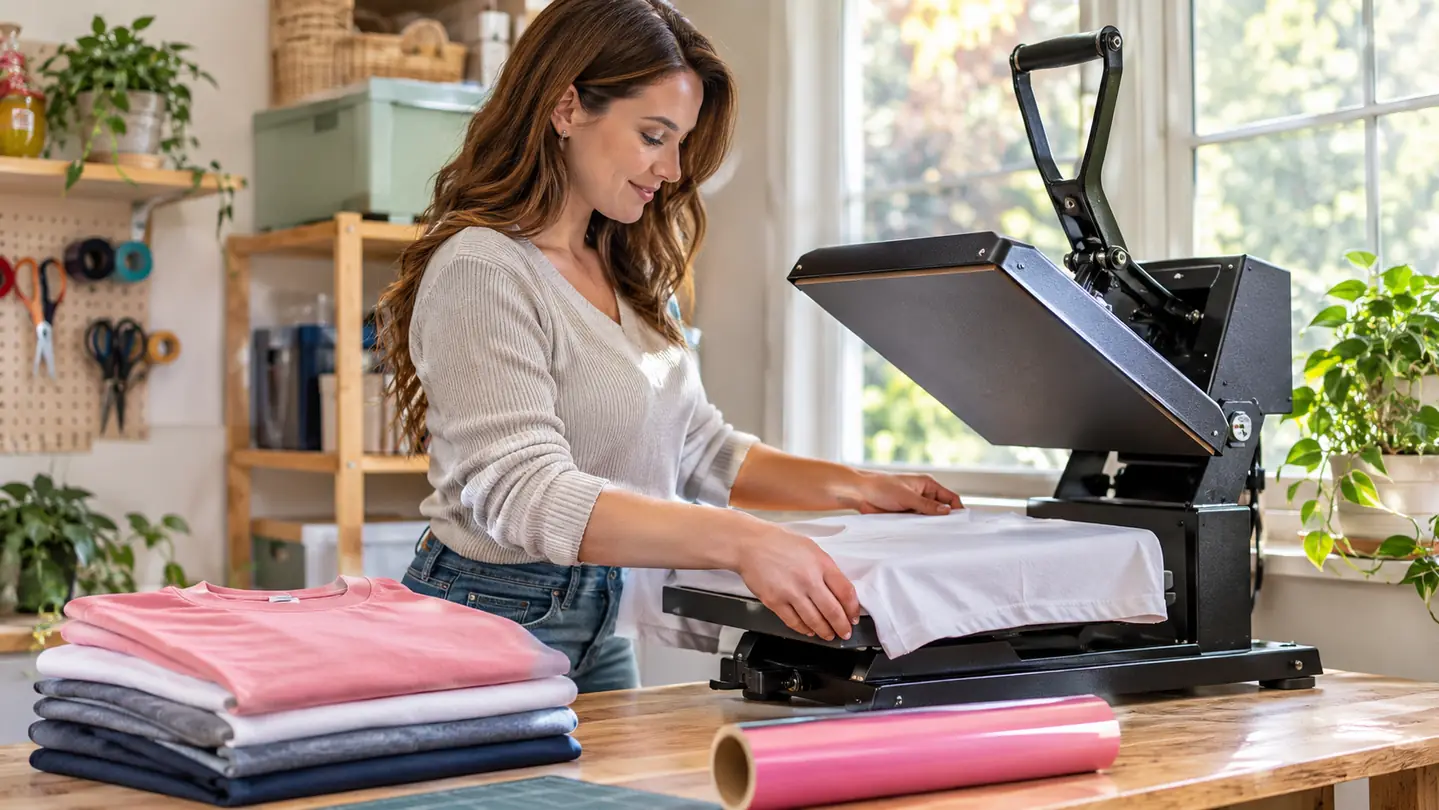
I did not buy a heat press to become a printer. I bought one because a few coworkers at the dental office asked for shirts for a fundraiser walk, and I was tired of watching iron-on letters lift in the wash. My first order was Siser EasyWeed, a roll of heat transfer vinyl, and the Fancierstudio 15x15 clamshell press, all bought with my own money in the first week of February. Nine months later, Siser EasyWeed is still the roll I reach for on cotton shirts. Not because it is fancy. Because it forgives the mistakes a beginner actually makes.
I press in the spare bedroom, on the workbench Gary built. My Cricut Explore Air 2 does the cutting. The press does the rest. I am not a professional printer and I do not play one on the internet. I am 49, I work weekdays at a dental office, and I craft on evenings and Saturdays. Here is what I would tell a friend who is standing in the same aisle I stood in, wondering why one roll of vinyl costs more than the craft store stuff.
The roll I stopped second-guessing
Siser EasyWeed is the HTV I bought in February and still reorder for cotton shirts. It cuts on a Cricut, peels hot, and layers with a 1-second tack.
Amazon Check It on Amazon →It peels hot, so you know right away if it took
Siser EasyWeed peels hot. That means no waiting for the shirt to cool on the platen while you wonder if the design is stuck. I press cotton at 305 F for 15 seconds, lift the press, and peel the carrier while the shirt is still warm. If a corner lifts, I can put the carrier back down and press again. A beginner needs that feedback loop more than any feature. Waiting for a cold peel feels like guessing, and I did enough guessing with a household iron in December.
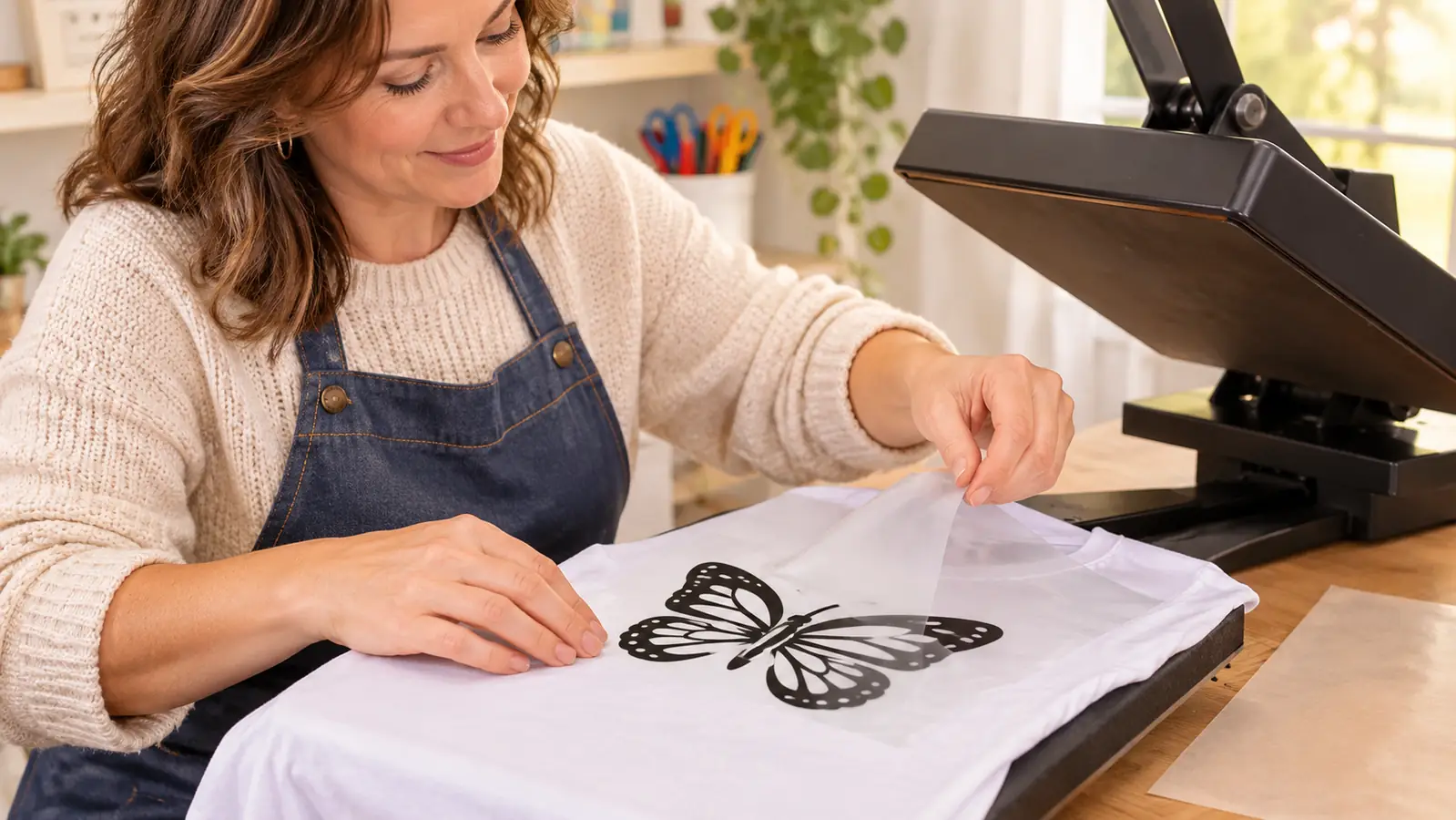
The 1-second tack saves layered designs
Layering is where I made a mess with craft store vinyl. Siser EasyWeed has a 1-second tack for layering, so I can place a second color, press for a second, and know it will stay put before I commit to the full press. I still use a teflon sheet, but I do not need four hands. For a two-color shirt for a church event, that tack is the difference between a clean stack and a shifted mess. It is a small thing that saves a whole shirt.
It cuts clean on a Cricut Explore Air 2
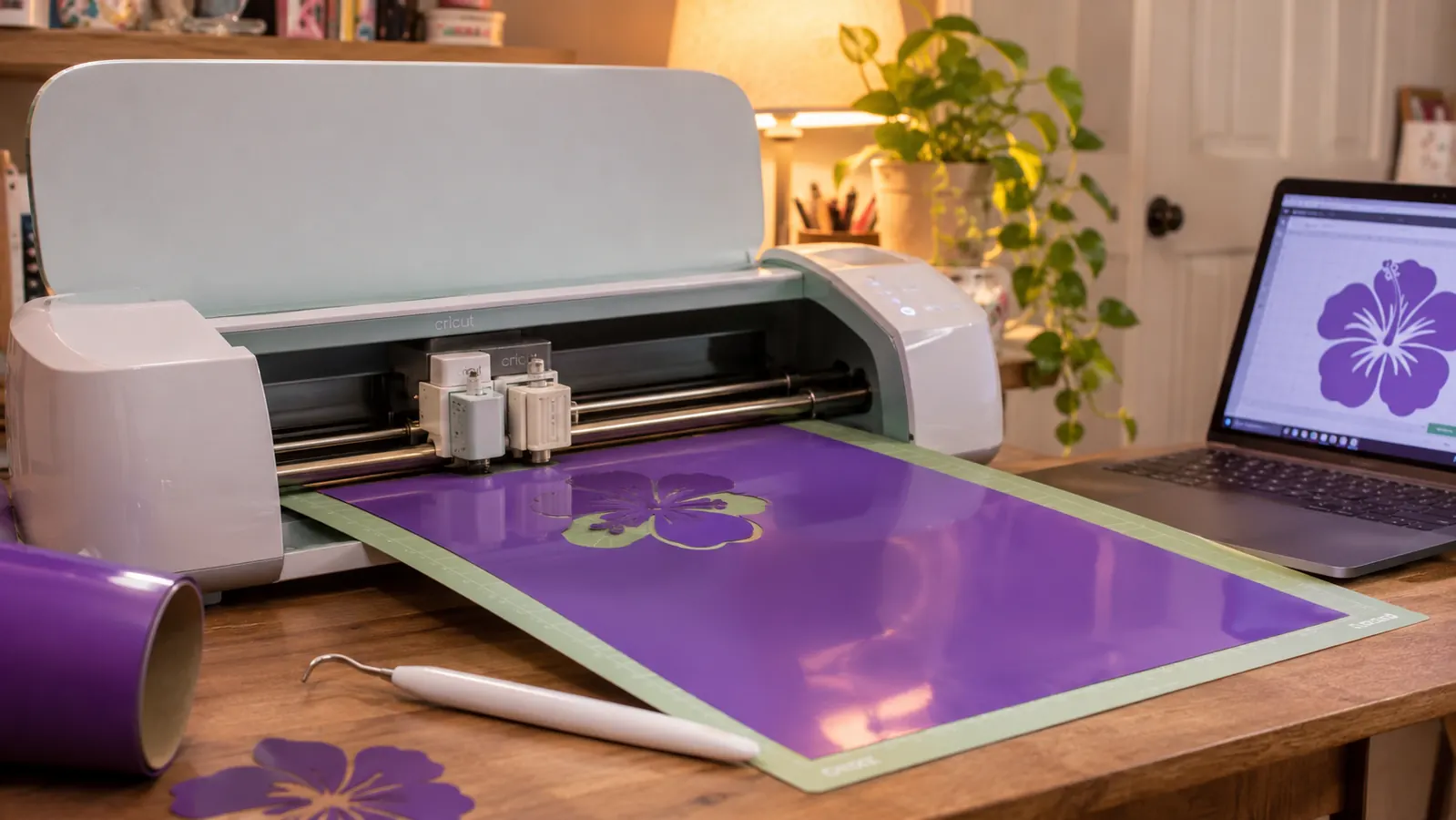
I use the Cricut Explore Air 2 I already owned for greeting cards. Siser EasyWeed cuts cleanly on it with a standard blade and a cut setting for heat transfer vinyl. The roll is 11.8 inches wide and 15 feet long, so it fits the mat without a fight and leaves me enough length for several shirts. I am not a patient weeder, and a clean cut means less time with a hook and more time pressing. That matters on a weeknight when I have already worked a full day.
At 90 microns, it does not feel like a plastic patch
Siser EasyWeed is 90 microns thin. I did not understand that number until I felt a shirt made with it next to one made with the thicker craft store vinyl from my December iron project. The thinner film follows the cotton, bends at the elbow, and does not sit on top of the shirt like a sign. My husband Gary noticed without being told, which is the highest praise a shirt gets in our house. A beginner may not think about feel, but the person wearing the shirt will.
It weeds small letters without a fight
Small letters are fiddly. I will not pretend otherwise. But Siser EasyWeed weeds with a steady hand and a good hook, and the carrier holds the letters in place while I move them to the shirt. On a shirt for a neighbor's grandson, I cut a 1-inch name and only lost one dot. With the craft store vinyl, I lost the whole word. The difference is the film, not my eyesight. If you plan to make name shirts for family, this is the detail that keeps you from starting over.
It is CPSIA certified, which matters for kids' shirts
The listing says Siser EasyWeed is CPSIA certified. I am not a lab, and I cannot test a roll in my spare bedroom. But when a coworker asks for a shirt for a baby shower or a grandchild, I like knowing the manufacturer states that certification. It is one less thing for a beginner to worry about when the shirt is going to a child. I still read the listing and follow the press settings, but the certification is a comfort I did not have with the no-name vinyl from the craft bin.
One roll lasts through several small projects
My roll is 11.8 inches by 15 feet. I cut a name here, a small shape there, and the roll keeps going. I reorder the same roll because I use it for letters and outlines on dark cotton shirts. I am not running a production shop. I make shirts for coworkers, neighbors and my church, and one roll has covered months of that without me measuring every inch like it is gold. For a beginner, that means fewer reorders while you are still learning what designs you like.
It works on cotton, polyester and blends
The listing materials include cotton, polyester, nylon, spandex, leather and mesh. I have only used it on cotton shirts, because vinyl is my choice for cotton and dark shirts where sublimation will not work. If you are making a shirt for a gym or a costume, check the fabric against the listing before you press. The point is that one roll can cover more than one kind of blank, which is helpful when you are still learning what you like. I keep my experiments on cotton and ask Pam about the rest.
Hot peel means no cooldown queue
When I press shirts for a fundraiser, I do not want a pile of warm shirts waiting for the carrier to cool. Siser EasyWeed peels hot, so I can press, peel, stack and move to the next shirt. That rhythm is simple, and simple is what I need on a weeknight after a full day at the dental office. The press is still hot, the teflon sheet is still there, and I can keep going. A cold-peel vinyl would turn a small batch into an all-evening waiting game.
It is the roll I recommend to a nervous beginner
If a friend tells me she is buying her first press and she is afraid of wasting material, I tell her to start with Siser EasyWeed and a stack of cotton shirts she does not love. Press at 305 F for 15 seconds, peel hot, and see what happens. The first shirt may not be perfect. But the roll gives you room to learn, and that is what a beginner needs. I would rather a new crafter learn on a forgiving roll than fight a cheap one and quit.
What I'd Skip
I would skip the bargain vinyl from the craft store bin for anything that will be washed. I used it in December with a household iron, and the letters lifted. I would also skip the idea that you need a commercial printer or a huge shop. A spare bedroom, a sturdy table, a 15x15 press and a roll of Siser EasyWeed got me through my first nine months. What I would not skip is a test press on a scrap shirt before you commit a full design. That one habit has saved me more than any gadget.
The first shirt may not be perfect. The roll gives you room to learn, and that is what a beginner needs.
Start with the roll that forgives a beginner
Siser EasyWeed cuts on a Cricut, peels hot and layers with a 1-second tack. It is the HTV I bought in February and still use on cotton shirts in my spare bedroom.
Amazon Check It on Amazon →