
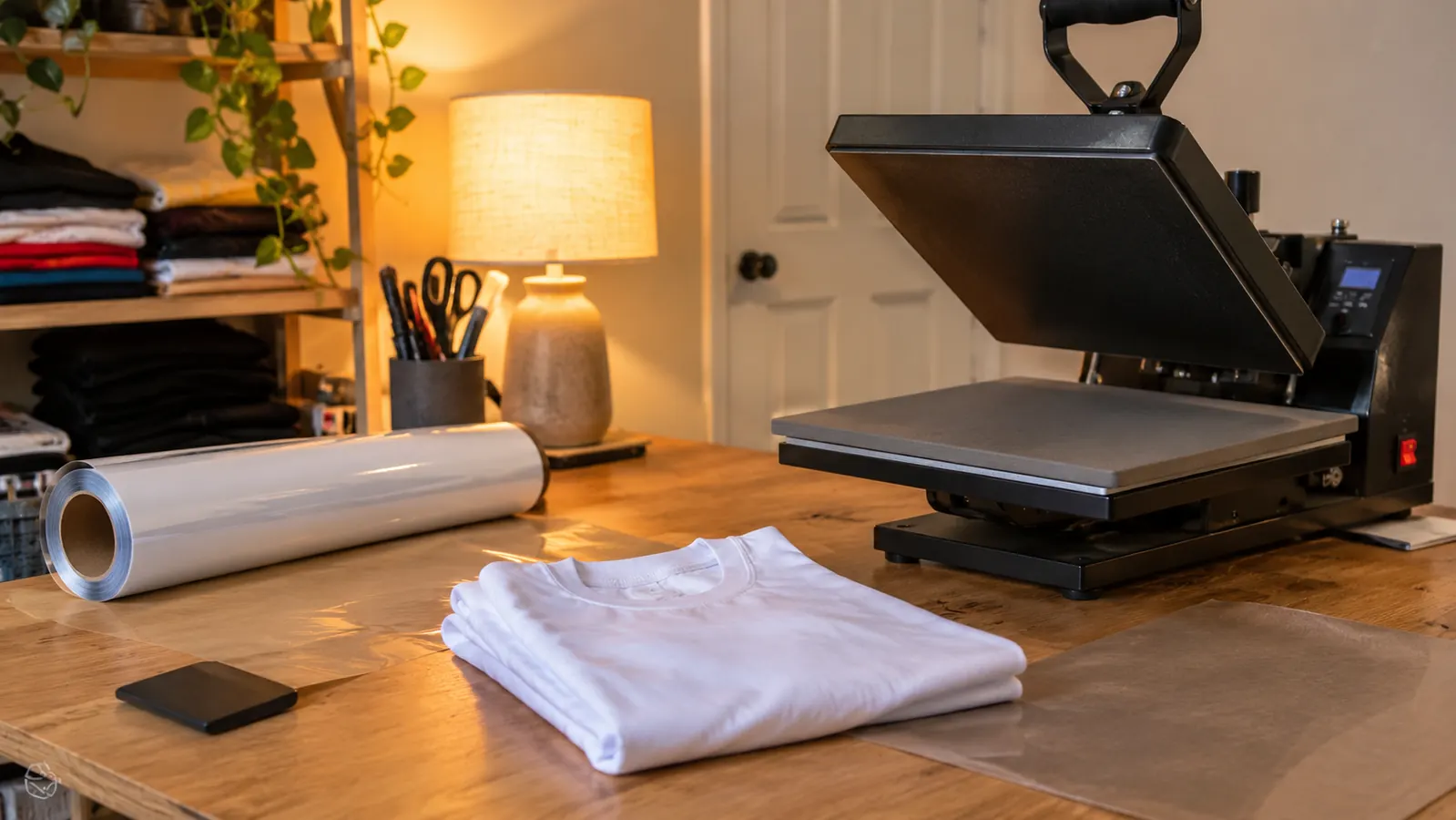
The first shirt I pressed with Siser EasyWeed was a cotton tee for a dental office fundraiser walk. I had the Fancierstudio clamshell set to 305 F for 15 seconds, the way the instructions said, and I peeled the carrier sheet while the shirt was still warm. I half expected the design to lift right off the cotton. It did not. That was February, and I have been using the same roll of Siser EasyWeed ever since.
Here is what I want you to know before you buy it: the vinyl is the easy part. The roll is 11.8 inches wide by 15 feet long, 90 microns thin, with a 1-second tack for layering and a hot peel that needs no cooldown. What nobody tells a beginner is that a good roll will sit in the drawer while you learn pressure, temperature and patience. Siser EasyWeed did not make me good at this. It just stopped being the thing I blamed when a shirt went wrong.
The Quick Verdict
A thin, forgiving vinyl that peels hot and layers fast. It will not rescue a weak press or rushed weeding, but after nine months it is the roll I keep reordering.
Amazon Check Today's Price →The Roll I Stopped Blaming After Nine Months
If you already have a cutter and a press that holds temperature, this is the vinyl I would start with. It cuts clean, peels hot and layers with a 1-second tack.
Amazon Check Today's Price on Amazon →What Nobody Tells You About EasyWeed
The first thing nobody tells you is that Siser EasyWeed is not a magic sheet. It is a 90 micron film with a carrier sheet, and it behaves like one. If your press is running cold, the vinyl will not stick, no matter what the label says. If your pressure is light, the edges will lift in the wash. If you weed too fast on a narrow script, a dot will disappear into the carpet. I know because I did all three in my first month, and none of it was the roll's fault.
The second thing is that small letters are fiddly. A clean, bold shape is a pleasure to weed. A thin serif or a script with a lot of internal holes is a test of your eyes and your patience. EasyWeed is thin enough that it cuts well, and that same thinness means a small piece can stretch or fold on itself while you are trying to place it. I keep a pair of fine tweezers and a good light on the bench for this. The vinyl is not fragile, but it is not construction paper either.
The third thing is that a light roll shows every smudge. I press with clean hands, but toner, lint and a little press dust find their way onto the carrier sheet. On a dark shirt you would never notice. On this roll I notice. I wipe the bench before I unroll it, and I keep the roll in the box when I am not cutting. That is not a defect. It is just the truth about a roll that is pale enough to show what your hands are doing.
How I Actually Use It
I cut Siser EasyWeed on a Cricut Explore Air 2 that I already owned for greeting cards. I mirror the design before cutting, put the vinyl on the mat with the carrier side down, and use the heat transfer vinyl setting on the machine. The roll is 11.8 inches wide, so it fits across a standard mat with room to spare. I cut a test shape first when I change to a new blade or a new design with a lot of detail. That one habit has saved me more vinyl than any setting chart.
After cutting, I weed on the workbench under a bright lamp. The 90 micron film is thin enough that the carrier sheet stays flat while I pull the negative away. I use a weeding hook for the inside of letters and a pair of tweezers for the dots on an i or a j. If a piece lifts off the carrier while I am weeding, I can usually lay it back down and press it with my thumb. If it folds onto itself, I cut a new piece. Fighting a folded piece is how you get a lump under the design.
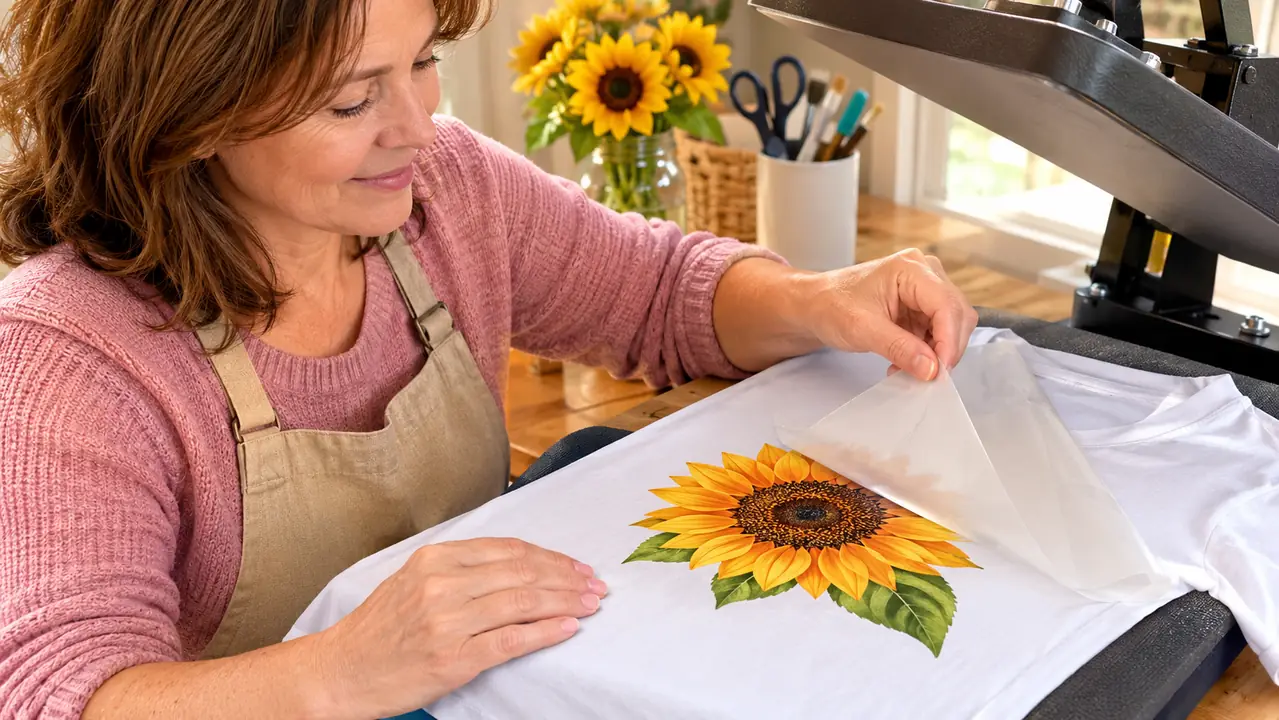
Pressing is where the roll earns its keep. I set the Fancierstudio to 305 F for 15 seconds, with the shirt on the lower platen and a teflon sheet over the design. I use firm pressure, the kind where the platen settles and you can feel the shirt compress. Then I peel the carrier hot, in one steady pull, while the shirt is still warm. The first time I did it I was sure the design would come up with the sheet. It stayed on the cotton, and the carrier came away clean.
Layering is the other place EasyWeed is friendly. The 1-second tack means I can place a second color, press it for a second, and check the alignment before I commit to the full 15 seconds. I do not layer often, because most of my shirts are one color on a cotton tee, but when I make a two-color design for a church shirt, that tack saves me from guessing. I press the bottom layer first, peel it hot, then tack the top layer and press the whole thing again.
What the Roll Does Not Do
EasyWeed does not fix a cold platen, a light pressure or a shirt that is not flat on the pad. It does not tell you that your press display can be off by 20 degrees. It does not make a hairline font weed itself. Those are the things I had to learn, and I learned them on scrap cotton before I touched a good shirt. The roll is consistent. The rest of the setup is where the variables live.
It also does not work on every blank in the house. The listing says it is made for cotton, polyester, nylon, mesh, spandex, leather, faux leather and lace. I have used it on cotton shirts and one cotton tote. I have not tried it on leather or lace, so I will not tell you how that goes. If you are pressing a coated blank or a fabric with a finish, test a scrap first. That is not a knock on Siser. It is how heat transfer vinyl works.
What I Liked
- Cuts clean on a Cricut Explore Air 2
- Peels hot with no cooldown wait
- 1-second tack makes simple layering easier
- 90 microns thin, so the design does not feel bulky on a shirt
- 11.8 inch by 15 foot roll fits standard mats and lasts through many shirts
- CPSIA certified, which matters for kids' shirts
Where It Falls Short
- Small letters and narrow scripts are slow to weed
- A light roll shows smudges and lint
- It will not fix a cold press or light pressure
- You still need a real heat source, not a household iron
The vinyl has not been the thing that failed. My temperature guess was. Once I started checking the platen with an infrared thermometer, Siser EasyWeed became the most predictable part of my week.
The Parts That Tested My Patience
I want to be honest about the learning curve, because a review that says everything was easy is not useful. A digital display and a measured temperature are not the same thing. If the display says 305 but the platen is running cooler, the vinyl will not bond the way it should, and it can lift at the edge in the wash. So I keep a cheap infrared thermometer by the press and check the platen before the first shirt of the night. That one habit does more for this vinyl than anything else I do.
The second test was a design with a narrow script for a coworker's shirt. I cut it, weeded it, and lost the dot on the first i. I found it on the floor, put it back, and lost it again. In the end I redesigned the name with a slightly heavier font and a wider bridge, and the shirt went fine. EasyWeed will cut what you send it. It will not make a hairline font into a bold one. That is a design decision, not a vinyl defect.
The third test is the roll itself. At 11.8 inches wide and 15 feet long, it is a craft-sized roll, not a production box. If you are cutting large back designs every day, you will go through it. I make shirts for coworkers, neighbors, my church and one fall craft fair, and a white roll lasts me a good while, so I just reorder the same one when it runs low. I keep it upright in the box, cut only what I need, and save the offcuts in a folder for small names and pocket logos. The offcuts are too useful to throw away.
Three Habits That Made It Predictable
I keep a cheap infrared thermometer on the bench and check the platen before the first shirt. I cut a small test square when I open a new blade. I weed under a bright lamp with tweezers within reach. I press a scrap of the same fabric before I press the actual shirt. None of these are Siser-specific. They are the habits that made the roll predictable. The vinyl was never the part that needed convincing.
The press stays on the workbench Gary built. A solid surface makes a difference when you are applying firm pressure, because flex in a table becomes light pressure at the platen. If your press rocks or the table gives, fix that before you blame the vinyl.
Where It Fits in My Week
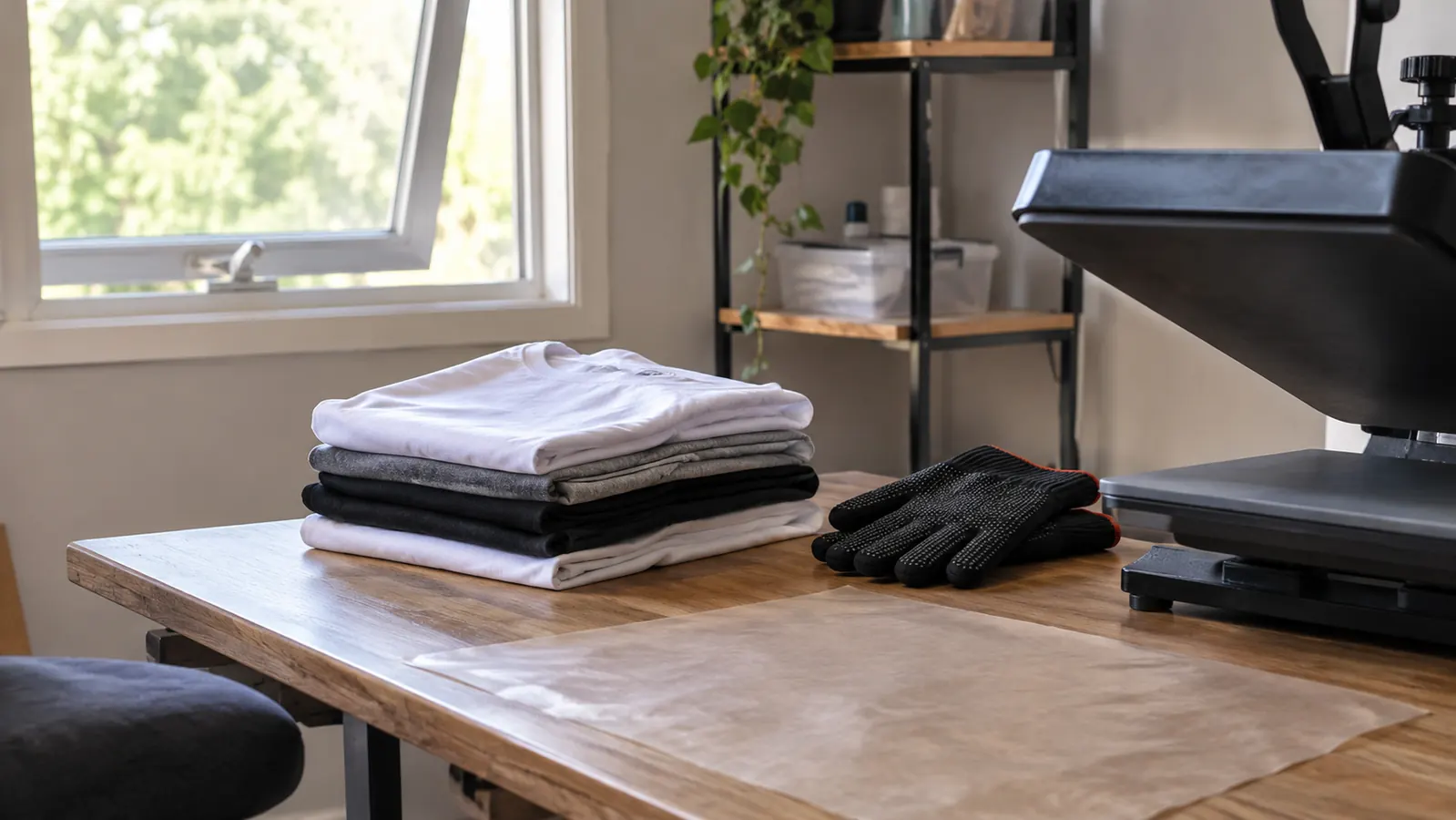
My setup is one spare bedroom, not a shop. Gary built a sturdy workbench that holds the 15 by 15 press, and the cutter and the tumbler press share a folding table by the window. I crack the window when I press, because the room gets warm and the vinyl smell is noticeable. I work on weeknight evenings and Saturdays, around my receptionist job at the dental office. That is the whole operation. Siser EasyWeed fits that scale because I can cut a name, press it, and clean up in the time between supper and bed.
I use vinyl for cotton shirts and for dark shirts, where sublimation will not work. I use sublimation for light polyester, and for the 20 oz straight tumblers. That split is the clearest thing I can tell a beginner. If your blank is cotton, you need heat transfer vinyl. If your blank is polyester and light enough, sublimation is an option. Siser EasyWeed is the vinyl side of that split for me, and it has been the same product since February.
Who This Is For
This is for the person who already has a cutter and a heat press, or who is about to buy both, and wants a vinyl that will not fight them while they learn. It is for cotton shirts, tote bags, and the kind of one-color name or small logo that makes up most beginner requests. It is for someone who will practice on a scrap piece before pressing a good shirt. If that is you, Siser EasyWeed is a sensible first roll. It cuts clean, it peels hot, and it layers with a quick tack.
It is also for the person who wants a thin finish. At 90 microns, the design sits close to the shirt, so a name across the chest does not feel like a patch. I have worn one of my own shirts through a normal week of work and laundry, and the vinyl has stayed flat. I cannot promise that for every shirt and every wash cycle, because I have not tested every combination. I can tell you what happened to mine.
Who Should Skip It
Skip it if you only make polyester sublimation shirts and tumblers. You do not need vinyl for that, and buying a roll will just sit in the drawer. Skip it if you are not willing to weed small details, because that is the slow part of the craft and no roll changes it. Skip it if you are still pressing with a household iron. I did that in December for Christmas shirts, and the vinyl lifted in the wash. The iron was the problem. EasyWeed would not have fixed it.
Skip it if you expect one roll to cover large back prints for a steady stream of shirts. The 11.8 inch width is fine for names, chest logos and small designs, but a full back print will eat the roll quickly. And skip it if you want a vinyl that hides lint and smudges. This roll does not hide anything. It is a good product, not a forgiving one.
The honest bottom line is that Siser EasyWeed is the first supply I stopped thinking about. I do not mean it is perfect. I mean I know what it will do at 305 F for 15 seconds, and I know what I have to do to get a clean peel. For a beginner with a cutter and a press that holds temperature, that predictability is worth more than a long list of features. Buy a roll, cut a test shape, and learn on scrap. The vinyl will meet you where your habits are.
The Vinyl I'd Hand a Beginner at the Craft Fair
If you have a cutter and a press that holds 305 F, start with the vinyl I have used since February. Cut a test shape, check your platen, and peel hot.
Amazon Check Today's Price on Amazon →