
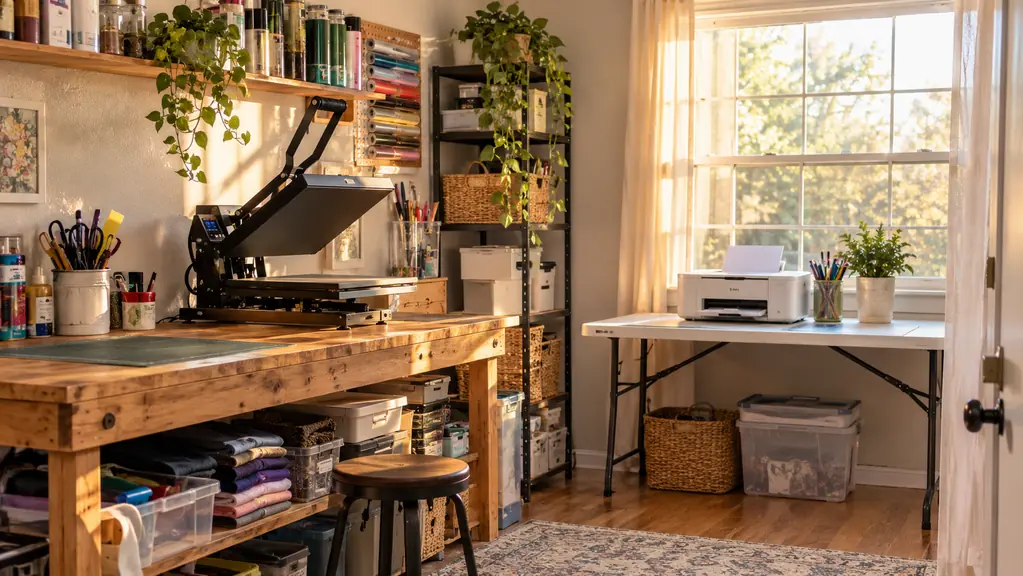
I bought the A-SUB Sublimation Paper in the first week of May, on the same day I bought the Epson SureColor F170 and the HTVRONT tumbler press. That was not a tidy upgrade plan. It was a rescue. In late April, a Saturday set of six tumblers for a friend's bridal party came out blurry with streaks, and my converted EcoTank clogged the same afternoon. I sat at the folding table by the window in my spare bedroom in Evansville, with the pack of generic paper I had been using, and decided I was done guessing.
I have used this paper since then for every sublimation print that leaves my house. Shirts for coworkers. Tumblers for neighbors. A small batch for my church. A few pieces for the fall craft fair. I am not a professional printer. I am a dental office receptionist who presses on weeknights and Saturdays, and I am writing the review I wanted before I spent my own money on a 110 sheet pack. The short version is that A-SUB does the job, but it is not foolproof, and most beginner trouble comes from two things the listing cannot teach you: which side goes up, and how the paper behaves in a humid room.
The Quick Verdict
A dependable coated sheet for polyester shirts and straight tumblers, with sharp transfers when I load it correctly and keep it flat. It will not save a bad press setting, and it will not work with regular ink.
Amazon Check Today's Price →The paper that got my tumbler transfers back on track
A-SUB Sublimation Paper, 8.5 by 11 inches, 110 sheets, 125 g. It works with sublimation ink on polyester and on coated blanks. Check the current listing before you buy so you know what you are getting.
Amazon Check Today's Price on Amazon →How I've Used It
Every sublimation print I make now starts in the same place. I open a design on the Windows laptop, mirror it, and print it onto one sheet of A-SUB. The F170 only takes 8.5 by 11, which is one reason this pack size fits my setup. I do not have a bigger printer, and I do not need one for shirts or 20 oz straight tumblers. I print, cut the sheet down if the design is small, and head to the workbench Gary built for the 15 by 15 press.
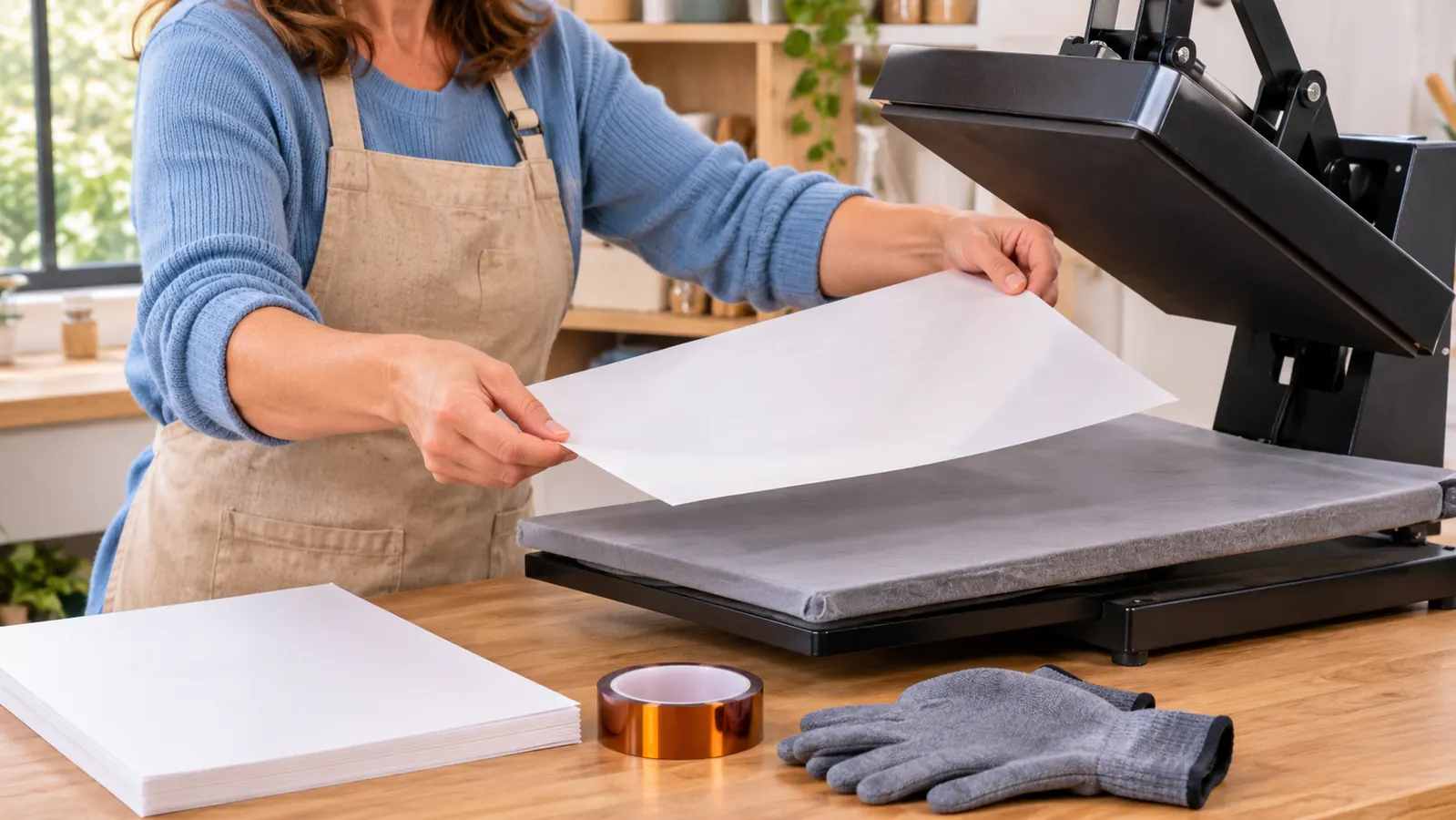
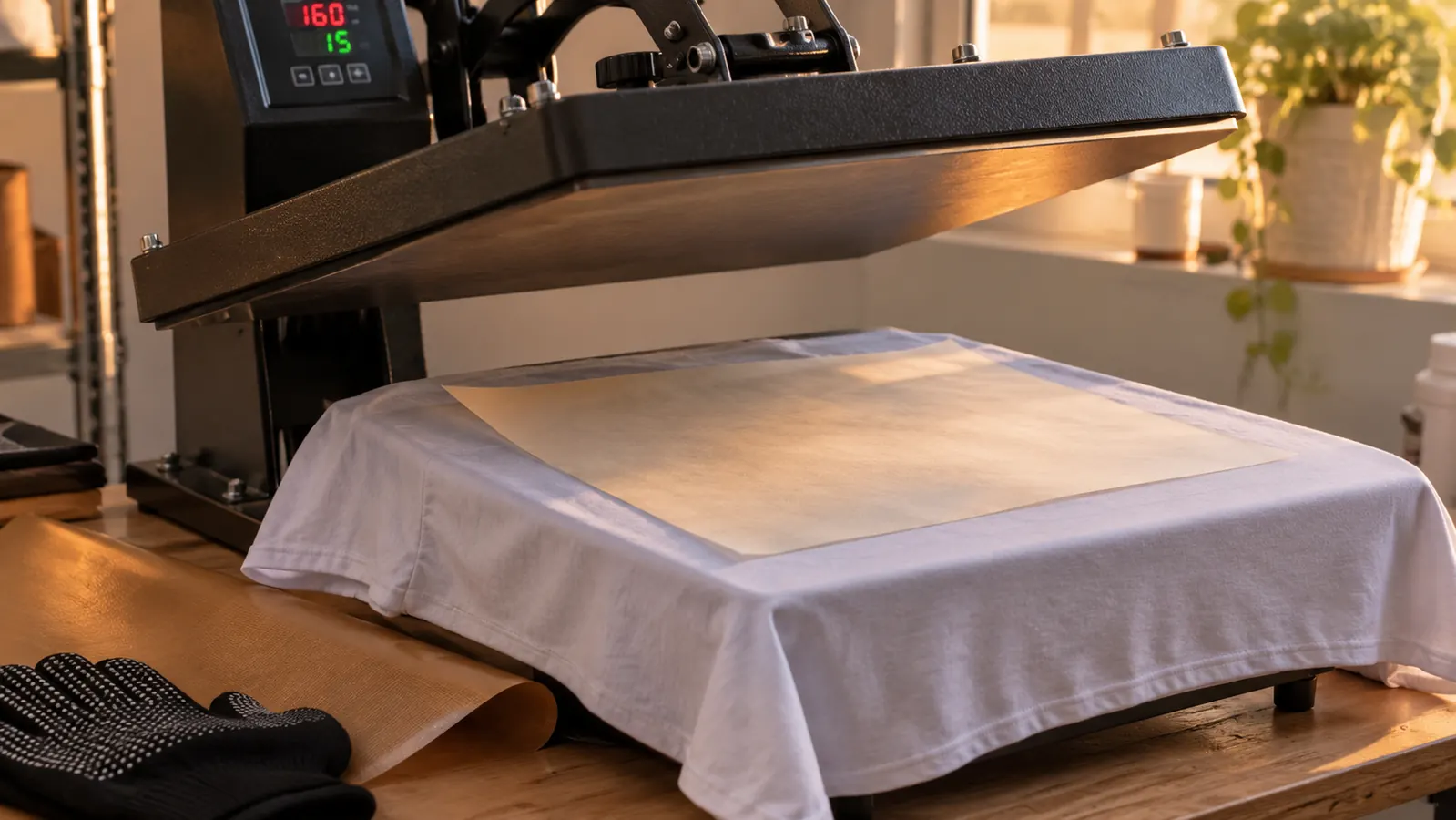
For polyester shirts, I press at 385 F for 50 seconds. For tumblers, I use the HTVRONT tumbler press at 365 F for 150 seconds. I use heat tape to hold the print, a teflon sheet or butcher paper over the top, and gloves when I handle anything hot. The A-SUB sheet releases cleanly when the settings are right. When they are not right, the paper is not the thing that failed first. A cold platen or a shirt with too much cotton will give you a dull transfer no matter what paper you feed the printer.
I keep the pack in the top drawer of the folding table, flat, with the receipt folded inside. That sounds fussy. It is not. The first pack I opened sat upright on the table for a week, and the sheets started to curl at the corners. A curled sheet can catch or feed unevenly, and then you are troubleshooting the printer when the real problem is the air in the room. Now the pack stays flat, and I close the drawer.
My first week with the paper was mostly a test. I printed a small design, pressed it on an old polyester shirt I did not care about, and wrote the time and temperature on a sticky note. That shirt is still in the rag pile, but the note stayed on the workbench. A beginner needs one scrap shirt and one honest note more than a shelf of supplies. The paper behaved the same on the second shirt as it did on the first. That consistency is the reason I stopped looking for another brand.
What Nobody Tells Beginners About the Print Side
The coated side of a sublimation sheet has one job, and the paper does not shout about which side it is. I check the corner every single time before I load the printer. If I can feel the coating, that side faces the print head. If I am not sure, I hold the sheet under the lamp by the window and look at the sheen. A sheet loaded wrong prints faint and patchy, and it is easy to blame the printer before you look at the sheet in your hand.
A-SUB sheets are coated on one side, and the pack does not come with a bright arrow pointing to it. That is the honest gripe. For a beginner, the first ten minutes with any sublimation paper are a guess. I marked a small X on the corner of the first sheet with a pencil, printed, and then checked which side the image landed on. After that, I knew. I am not suggesting you write on every sheet. I am suggesting you do it once so you stop second-guessing the stack.
The other thing nobody tells you is that regular ink will not work. The listing says it only works with sublimation ink, and that is not a suggestion. I had a converted EcoTank before the F170, and I know what happens when you mix the wrong ink into the process. The image looks like a wet photocopy, then it presses into almost nothing. If you are still deciding between a converted printer and a real sublimation printer, settle that before you judge any paper. A-SUB cannot fix the wrong ink.
I also had to learn that the paper is not the place to save time. It is tempting to print a batch of sheets and stack them on the table while you press the first one. I did that once. The sheets picked up a slight curl from the room, and the bottom one had a fingerprint on the coating. Now I print one or two ahead at most, and I keep them flat under a book until I am ready. That habit costs me a few minutes and saves me a shirt.
The paper is not the part that makes you good at sublimation. It is the part that stops getting in the way once your ink, your press and your blank are right.
Humidity Is the Quiet Problem
Evansville is humid in the summer. My craft room is a spare bedroom with a window I crack open when the press is running, and that window is enough to change how the paper behaves. A-SUB sheets curl at the edges when the air is heavy. They do not curl every time, and they do not curl in the winter the same way, but when they do, the printer is not happy. A curled sheet can catch on the corner and smudge the first inch of a print. That is a paper handling problem, not a printer problem.
My fix is simple. The pack stays flat in the drawer. I take out one sheet at a time and close the drawer. If a sheet has been sitting out and has a curl, I lay it under a heavy book for a few minutes before I print. I also do not leave the printer loaded overnight. The F170 needs a test print every week or so to keep the ink moving, and I use that test print to check the paper feed as well. If the first sheet of the week curls, I know the room is damp before I waste a shirt.
This is the part of the review where I would love to tell you the paper never gives me trouble. It does. It is paper, and paper reacts to the room. The difference is that the trouble is predictable now. I know the signs. I know the fix. A beginner who leaves the pack open on the table in July will have a different experience, and it will not be the paper's fault. Keep it flat, keep it closed, and check the sheet before you print.
What It Transfers Onto, and What It Will Not
The listing says A-SUB works on polyester and on material with cotton content at or below 30 percent, plus ceramic, tile, phone cases and metal. I can only speak to what I use. I use it on polyester shirts and 20 oz straight sublimation tumblers. Those are my blanks. I do not make mugs, hats, ceramic tile or phone cases, so I am not going to pretend I have tested them. If you make those things, the paper may be fine, but you need to hear that from someone who actually runs them.
Sublimation needs a polyester surface or a coated blank. A 100 percent cotton shirt will not take a sublimation transfer, no matter how long you press it. That is why I keep Siser EasyWeed for cotton shirts and dark shirts. The vinyl goes on cotton at 305 F for 15 seconds and peels hot. The A-SUB paper goes on polyester. I do not mix the two jobs in my head anymore. If a coworker asks for a cotton shirt with a full color photo, I explain that the photo will look faded and cracked, and I offer vinyl instead.
The paper is 8.5 by 11 inches and comes 110 sheets to a pack. That size covers a standard shirt front or back if I place the design well. For a tumbler, I print the wrap in sections or size the design to the 20 oz straight blank. I do not have a wide format printer, and I do not try to make this paper do a job it was not cut for. The 125 g sheet feeds through the F170 without a problem when it is flat. The listing calls it high transfer rate, and I get solid, sharp transfers when the press is at the right temperature.
One more limit. The paper is not a magic surface that makes a cheap blank behave like a good one. A polyester shirt with a tight weave takes a sharp image. A thin polyester shirt with a loose weave can look fuzzy around the edges even when the paper and press are right. I learned that with a pack of blanks I bought before I knew what to look for. The paper did its job. The shirt did not.
The Comparison I Can Actually Make
My friend Pam has a bench in her garage and a sublimation oven. She uses HTVRONT sublimation paper. I have tried her paper a few times at her house, on her equipment, with her settings. I have not bought a pack, I have not run it through my F170, and I cannot give you a clean side by side. What I can tell you is that the HTVRONT paper felt similar in my hands. The difference in the final shirt had more to do with the press and the blank than with the sheet.
I know that is not the answer a shopper wants. A review that says both papers are probably fine is not as satisfying as a winner. But I would rather tell you the truth. My A-SUB pack has been consistent for about six months. Pam's paper has been consistent for her. If you already have a press and a printer that you trust, pick one paper and learn it before you spend time comparing. The beginner variable is almost never the brand of paper.
What I can compare is my own paper history. I used a generic no-name pack from mid February through late April. Some sheets were fine. Some were not. I used it up because I had it, and I did not go back after I bought the A-SUB pack in May. The difference was not dramatic. It was fewer surprises. For a beginner, fewer surprises is worth more than a fancy label.
Who This Is For
This paper is for the beginner who has a sublimation printer, polyester blanks and a heat press, and who wants a pack that will not fight them while they learn. It is for the person making shirts for a family reunion, tumblers for a bridal party, or a small batch for a church event. It is for the crafter who will check the print side, keep the pack flat and write down the time and temperature instead of guessing. If that is you, A-SUB is a reasonable pack to start with.
It is also for the person who already tried a generic no-name paper and got inconsistent results. I used a generic pack from mid February through late April. Some sheets were fine. Some were not. I used it up because I had it, and I did not go back after I bought the A-SUB pack in May. The difference was not dramatic. It was just fewer surprises.
And it is for the person who wants one paper for shirts and straight tumblers, not a shelf of specialty sheets. I do not make mugs, hats, ceramic tile or phone cases. I make shirts and tumblers. The 8.5 by 11 size and the 110 sheet count fit the way I work. If your work looks like mine, this pack will feel familiar fast.
Who Should Skip It
Skip it if you are looking for a paper that will work with regular ink. It will not. Skip it if you want to print on 100 percent cotton and skip vinyl. Sublimation does not work that way. Skip it if you are not willing to check the print side, keep the sheets flat and test your press temperature. A-SUB is a tool, not a shortcut. The person who loads any coated sheet backward will get a bad print with this pack too.
Skip it also if you need a size other than 8.5 by 11. This pack is 8.5 by 11, and that is what it is. If your designs need a larger sheet, this is not the pack for you. I have a small setup, and that size fits my work. If you are making large back prints or wide tumbler wraps in one piece, you need a different paper and probably a different printer.
What I Liked
- Consistent transfers on polyester shirts at 385 F for 50 seconds
- Works in my F170 with 8.5 by 11 designs
- 110 sheets per pack gives a beginner room to practice
- Coated sheet releases cleanly with heat tape and a teflon sheet
Where It Falls Short
- Print side is easy to mix up
- Curls in a humid room if left out
- Only works with sublimation ink
- Not for 100 percent cotton
If your press settings are dialed in, let the paper be the easy part
A-SUB Sublimation Paper comes in an 8.5 by 11 inch, 110 sheet pack at 125 g. It is made for sublimation ink on polyester and coated blanks. Check the current listing and confirm the size before you order.
Amazon Check Today's Price on Amazon →