In December I made Christmas shirts with my Cricut and the household iron, and the vinyl lifted on every one of them in the wash. That iron was the only pressing tool I had. Then the women at the dental office asked about shirts for a fundraiser walk, and in the first week of February I ordered the Fancierstudio 15 by 15 clamshell press with my own money. Nine months later it is still the machine on Gary's workbench, still pressing every flat shirt I make. Here is why I think it is the right first press for someone standing where I was.
A beginner does not need a press that can do everything. A beginner needs a press that does one thing predictably, so the mistakes you make are yours and not the machine's. The Fancierstudio presses flat shirts, both vinyl on cotton and sublimation on polyester, and it does them the same way every time once you set the numbers. These are the ten reasons that mattered to me.
Start on a press you can learn in one Saturday
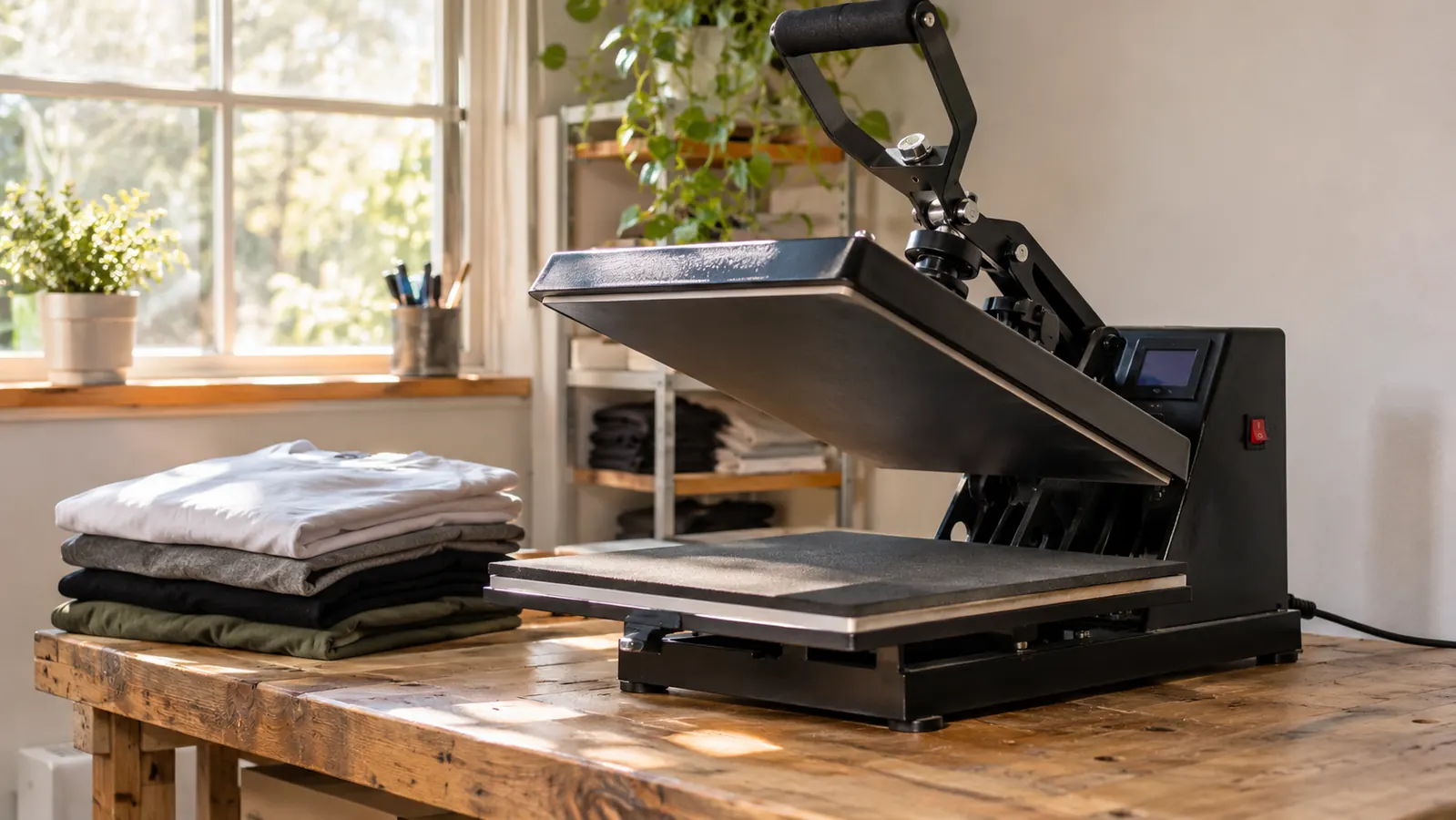
The Fancierstudio 15 by 15 clamshell with digital time and temperature and a Teflon coated platen. It is the machine I learned on, in my spare bedroom, with a household iron as my only predecessor.
Amazon Check Today's Price on Amazon →It opens like a book, so you load a shirt flat
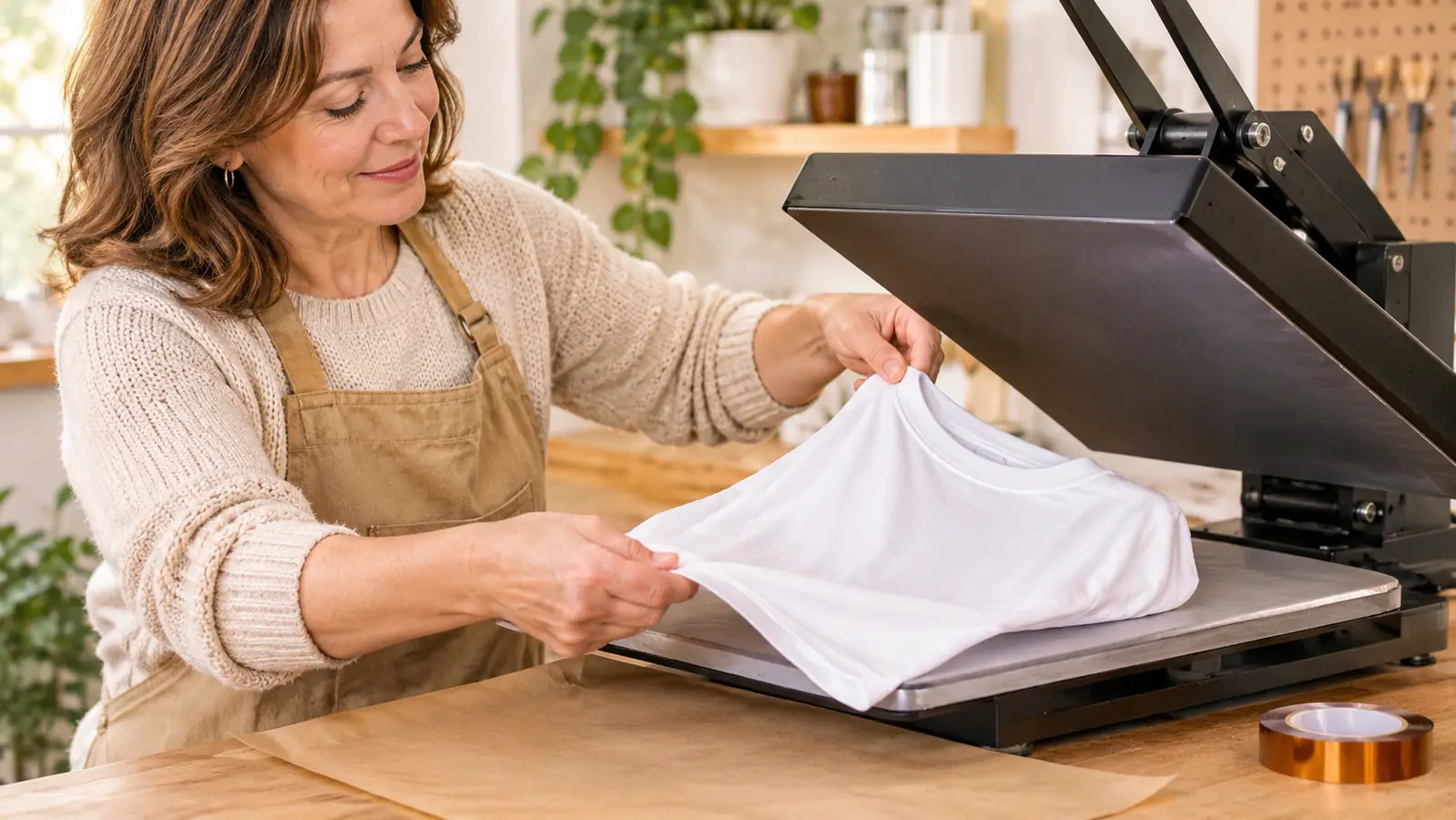
A clamshell is hinged at the back. You lay the shirt flat on the lower platen, smooth it with both hands, and bring the top down. Nothing swings out of the way and you are not sliding fabric under a hot plate. The first week I had the Fancierstudio, I pressed shirt after shirt in the time it used to take me to fight one shirt around an iron. The open platen does come toward your hands, so I wear gloves and stand a little to the side.
The 15 by 15 platen covers a full adult front print
The platen measures 15 inches by 15 inches, which is a full front print on an adult shirt. A design that fills the chest of an XL cotton shirt fits inside it with room to spare, and I place by eye from the collar down. What it will not do is a print that wraps around the side of the shirt or runs past the platen edge. For back prints I position the same way and check the placement in the mirror before I close it.
Digital time and temperature replace the guessing
The controls are electronic, with time and temperature you set as numbers instead of guessing with a dial. I run Siser EasyWeed on cotton at 305 F for 15 seconds, and sublimation on light polyester at 385 F for 50 seconds. Once those numbers are in, the press counts down. My cheap infrared thermometer says the platen runs a little off what the readout claims, so I check it every few weeks and adjust. Knowing that beats trusting an iron and hoping.
One Saturday is enough to press your first good shirt
You do not need a class. The first Saturday after the press arrived I pressed a cotton shirt with white EasyWeed, peeled it hot, and it stayed put through the wash. That was the whole lesson. Load flat, set the numbers, close, wait, peel. The parts that take longer to learn are placement and pressure, and both come from doing the work, not from a manual. The manual is thin, honestly. The machine is not complicated enough to need a better one.
The Teflon coated platen forgives a beginner's mistakes
The platen has a Teflon coating, so vinyl residue does not build up on bare metal the way it does without one. A stray bit of adhesive wipes off instead of baking on. I still lay a Teflon sheet or butcher paper over anything with a print I care about, because a coating reduces sticking, it does not make the press self cleaning. For someone who is going to scorch a shirt eventually, the coating buys a little forgiveness.
It handles vinyl on cotton and sublimation on polyester
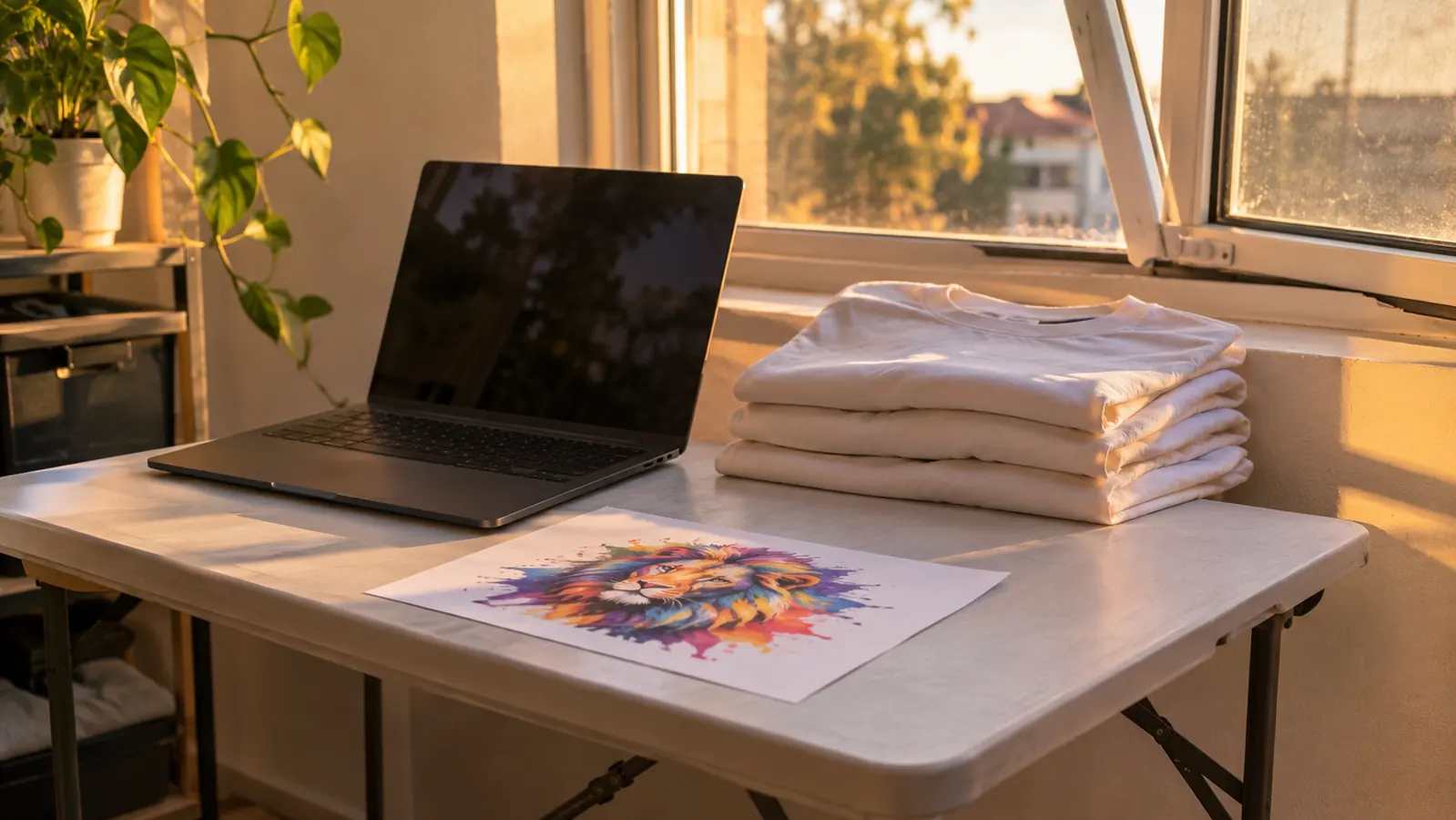
This one press covers both jobs I actually do. Cotton shirts in any color get Siser EasyWeed, because sublimation will not bond to cotton. White or light polyester shirts get sublimation, printed on A-SUB paper from my Epson F170. The press does not care which one it is doing. I change the numbers, change the paper or the vinyl, and keep going. Two crafts, one machine, one footprint in the spare bedroom.
It holds its numbers while you work through a stack
Batch work is where a press like this earns its bench space. When I have a run of cotton shirts, I set 305 F and 15 seconds once, then press one after another without touching the controls. The time resets and the heat holds. That rhythm is what the iron never gave me, because an iron cools the second you lift it and you are guessing at pressure with your arm. Set the numbers, repeat, stop thinking about the machine.
Its 33 by 23 inch footprint earns a permanent bench
The press measures 33 inches long, 23 inches wide and 20 inches high, which is a footprint you give a permanent home. Gary built the workbench in the spare bedroom to hold it, and it has not moved since February. Having it set up and ready is half of why I use it on a weeknight instead of putting the job off until Saturday. A press you have to clear off the table first is a press you stop using.
1800 watts on a 110 volt circuit, so plan your outlet
The press draws 1800 watts at 110 volts, which is ordinary household power but enough that it wants its own outlet circuit. Gary ran a dedicated circuit to the spare bedroom before I plugged it in. I press with it plugged straight into the wall, not into a power strip shared with the printer and the Cricut. If you are setting up in a spare room, sort the circuit out first. It is the least interesting part of the hobby and the part that keeps the lights on.
A 3 month warranty sets honest expectations
The warranty is three months, which tells you plainly what kind of machine the Fancierstudio is. It is a first press, not a forever press. Mine has run for nine months without a problem, so the short warranty has not cost me anything, but I bought it knowing that if something failed in month five I would be on my own. For a beginner that is a fair trade. Learn on it, find out what you actually make, and upgrade later if you outgrow it.
The vinyl lifted off my December shirts because an iron cannot hold 305 F for 15 seconds. The Fancierstudio can.
What I'd Skip
Two things I would skip. First, the attachments and bundles. A press that comes with extras for mugs, plates and hats sounds like more value, and for the work I do it is shelf clutter. I do not make mugs, hats, tile or phone cases and never have, and a mug attachment would not change that. Second, I would skip pressing on the kitchen table. The press needs a surface that will not shift under your hands and a spot where you can leave it set up. The folding table by the window is for my tumbler press and the printer, not for this. Gary's bench is where the pressing happens, and that has not changed since February.
Give the press a bench and it will give you shirts that survive the wash
15 by 15 platen, electronic time and temperature, Teflon coated platen, 3 month warranty. This is the machine I would buy again as a first press.
Amazon Check Today's Price on Amazon →