
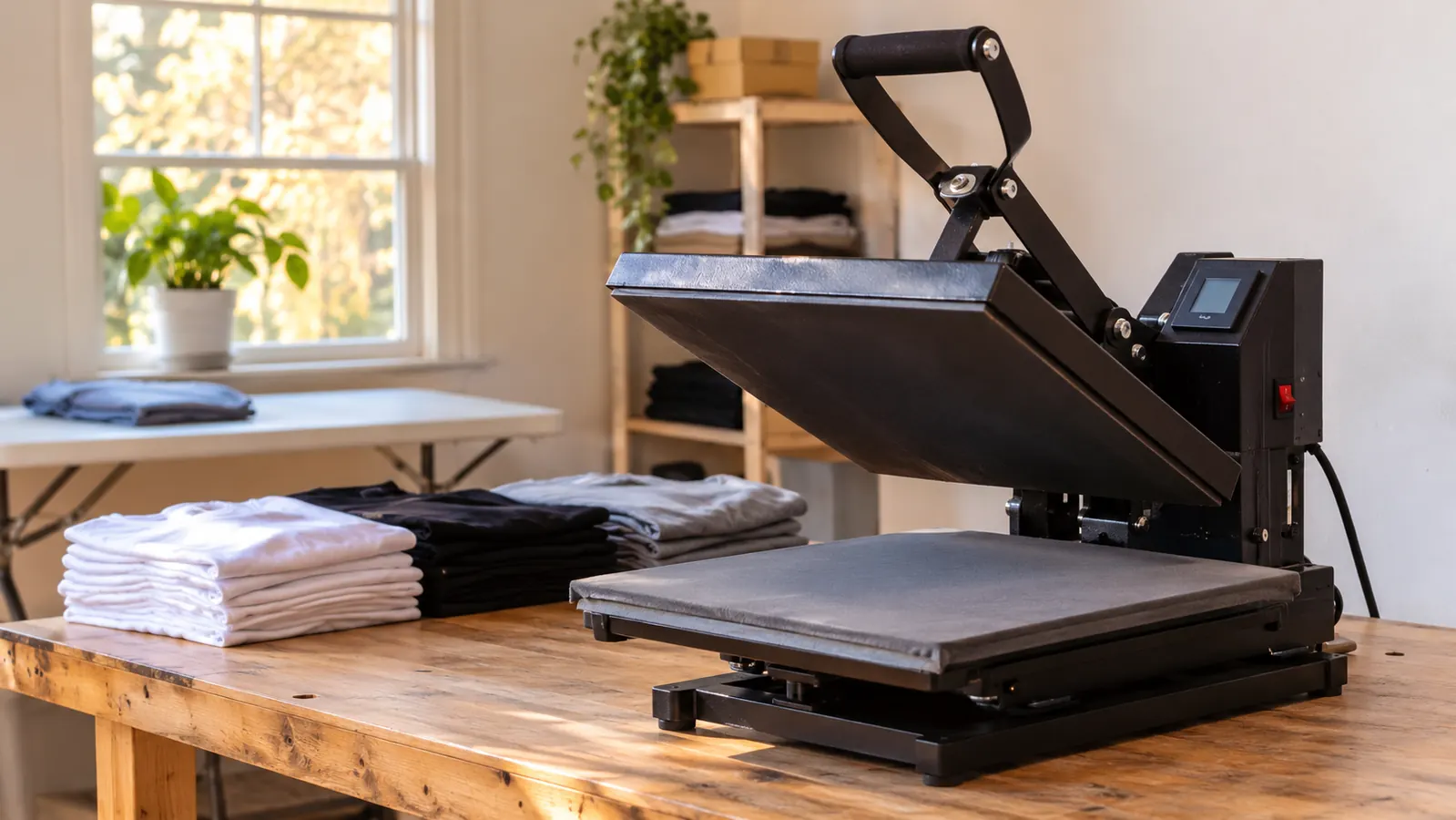
Our spare bedroom has one window, a folding table by it, and a workbench my husband Gary built out of two-by-fours because he knew a folding table would not hold a press that heavy. Gary is a maintenance tech. He does not craft. He just builds things that hold other things, and that workbench is the only reason any of this works.
In December I made Christmas shirts at the kitchen table with my Cricut and a household iron. They looked fine on the table. Then they went through the wash and the vinyl lifted at the corners, and I folded them into a drawer and did not say much about it.
The push came in the first week of February. A few women from the dental office where I work as a receptionist asked about shirts for a fundraiser walk, and I said yes before I had any business saying yes. That same week I ordered a Fancierstudio 15x15 heat press and a roll of Siser EasyWeed, with my own money, from Amazon.
The box arrived on a Thursday and I could not lift it. Gary carried it in and set it on the workbench and then we read the manual together at the kitchen table like two people doing taxes. The Fancierstudio is a clamshell press, so the top half swings up and down instead of sliding, and the pressing surface is 15 by 15 inches.
The first thing I learned is that it wants its own outlet. 1800 watts at 110 volts will trip a circuit that already has a space heater running on it. I moved a lamp off the bedroom circuit and stopped having that problem.
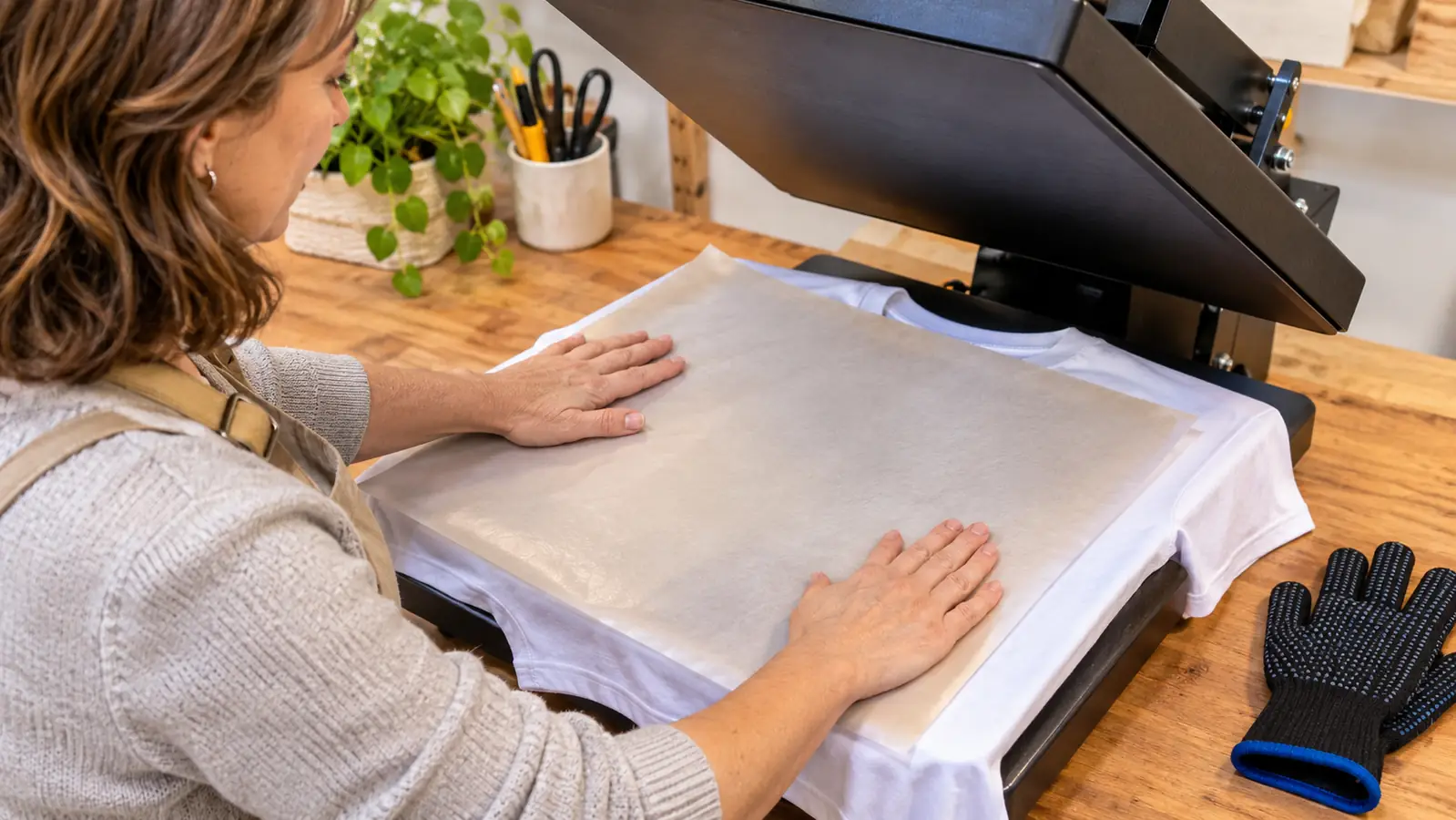
The second thing I learned is that the numbers on the display matter more than the feel of the handle. I press Siser EasyWeed on cotton at 305 degrees for 15 seconds and peel hot, and it comes off the platen clean every time. With the iron I had been guessing. Guessing was the whole problem.
Three hundred five degrees for fifteen seconds, peel hot. That is the entire difference between a shirt that survives the wash and a shirt that goes back in the drawer.
If your vinyl keeps lifting in the wash, this is what I bought to fix it
15 by 15 inches, 110 volts, 1800 watts, teflon coated platen, electronic time and heat control. It lives on a workbench in my spare bedroom and it has not moved since February.
Amazon Check Today's Price on Amazon →By the middle of February I was using the same press for sublimation, which is a different animal entirely. A light polyester shirt goes down at 385 degrees for 50 seconds, and the design has to be mirrored before it prints or it comes out backwards. Same platen, different numbers, and I wrote both settings on a card and taped it to the wall.
It does not press tumblers. I want to be clear about that, because people see a 15x15 platen and assume it does everything. A tumbler is curved and the platen is flat, so tumblers go to a separate machine on the folding table by the window. The Fancierstudio handles every flat thing I make: cotton shirts, polyester shirts, and the occasional tote bag.
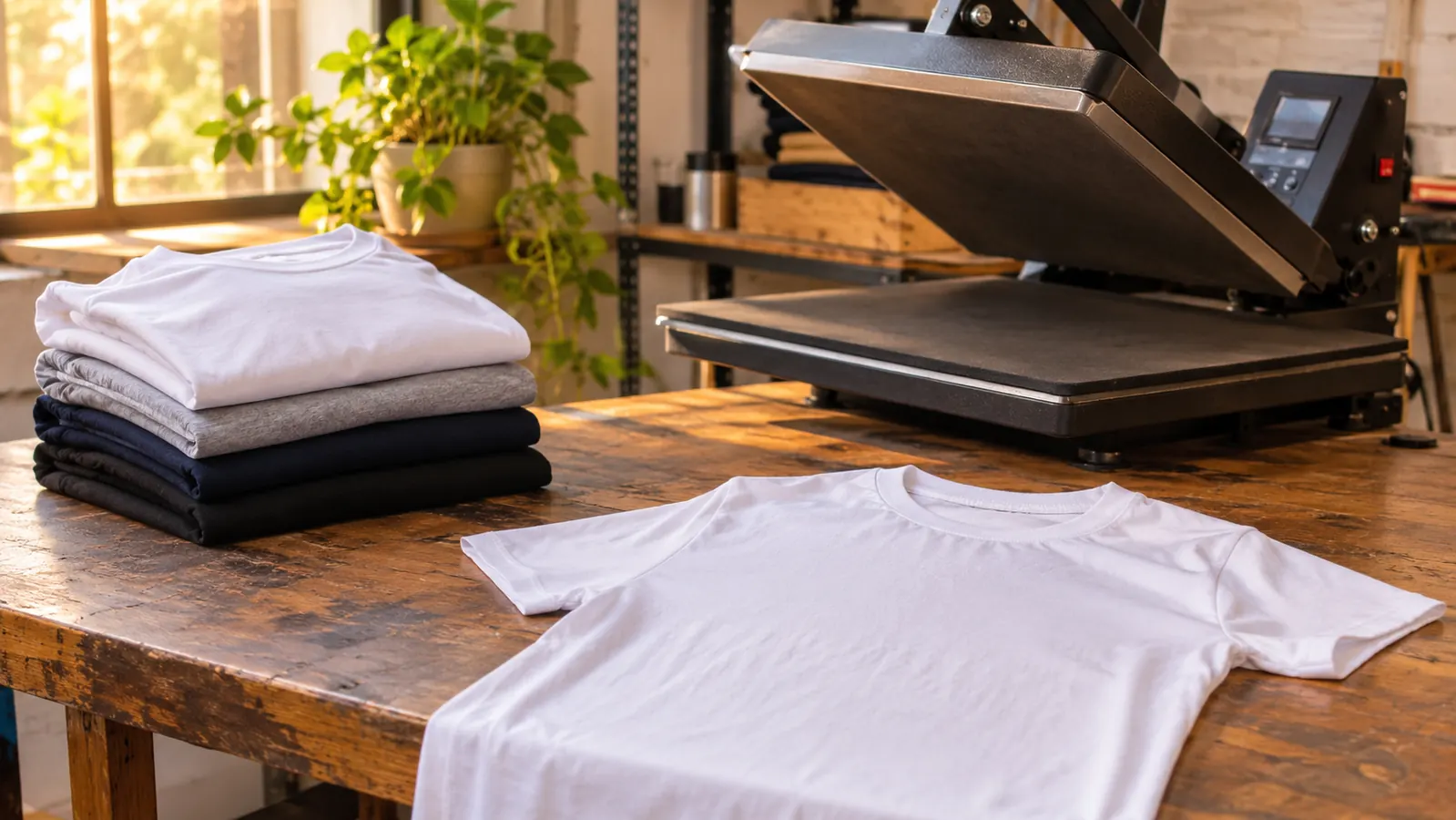
Three things I would tell you before you order one. It is heavy, and by heavy I mean Gary and I moved it once and then left it where it landed. It is also 33 inches long and 23 wide and 20 tall, so it took over most of a workbench that was supposed to hold other things. The warranty is 3 months, which is short for a machine this size, and I said so out loud when I read the card. And the clamshell opens up and toward your face and hands when you lift the handle, so I stand off to the side and keep heat gloves on the bench.
I keep a cheap infrared thermometer in the drawer and check the platen against the display every few weeks. The teflon coated surface heats evenly enough that my shirts come out consistent, but a display is a display and a thermometer is a fact. That is not a knock on this machine. It is what I would do with any press.
There is a rhythm to it that I did not expect. I set the time and temperature on the electronic control, wait for the platen to come back up to heat, press, lift, peel, and lay the next shirt down while the last one cools. On a Saturday morning I can work through a stack of cotton shirts without thinking much about the machine at all, which is the highest thing I can say about a tool. I press in the spare bedroom with the window cracked open, never in the kitchen and never in the garage.
What I'd Tell You If We Were Sitting at My Kitchen Table
I would tell you that a heat press is not a purchase you want to make twice. The iron got me through one Christmas and left me with a drawer full of shirts I do not wear. The Fancierstudio got me through a fundraiser walk, a spring of sublimation experiments, and every flat blank I have pressed since, and it has been about nine months without a single thing going wrong with it.
I would also tell you that the press is not the part that keeps costing you. The shirts, the vinyl, the paper and the blanks are, and a machine that holds its temperature is what keeps you from wasting them. If you are on the fence, buy the press before you buy another bin of blanks.
And I would tell you to write your settings on a card and tape it to the wall. 305 for 15 on cotton vinyl. 385 for 50 on polyester. Those two lines have saved me more shirts than any gadget in the room.
Nine months, one workbench, and the same press
15 by 15 clamshell with a teflon coated platen and electronic time and heat control. It is the one piece of equipment in my spare bedroom I have never once wanted to replace.
Amazon Check Today's Price on Amazon →