
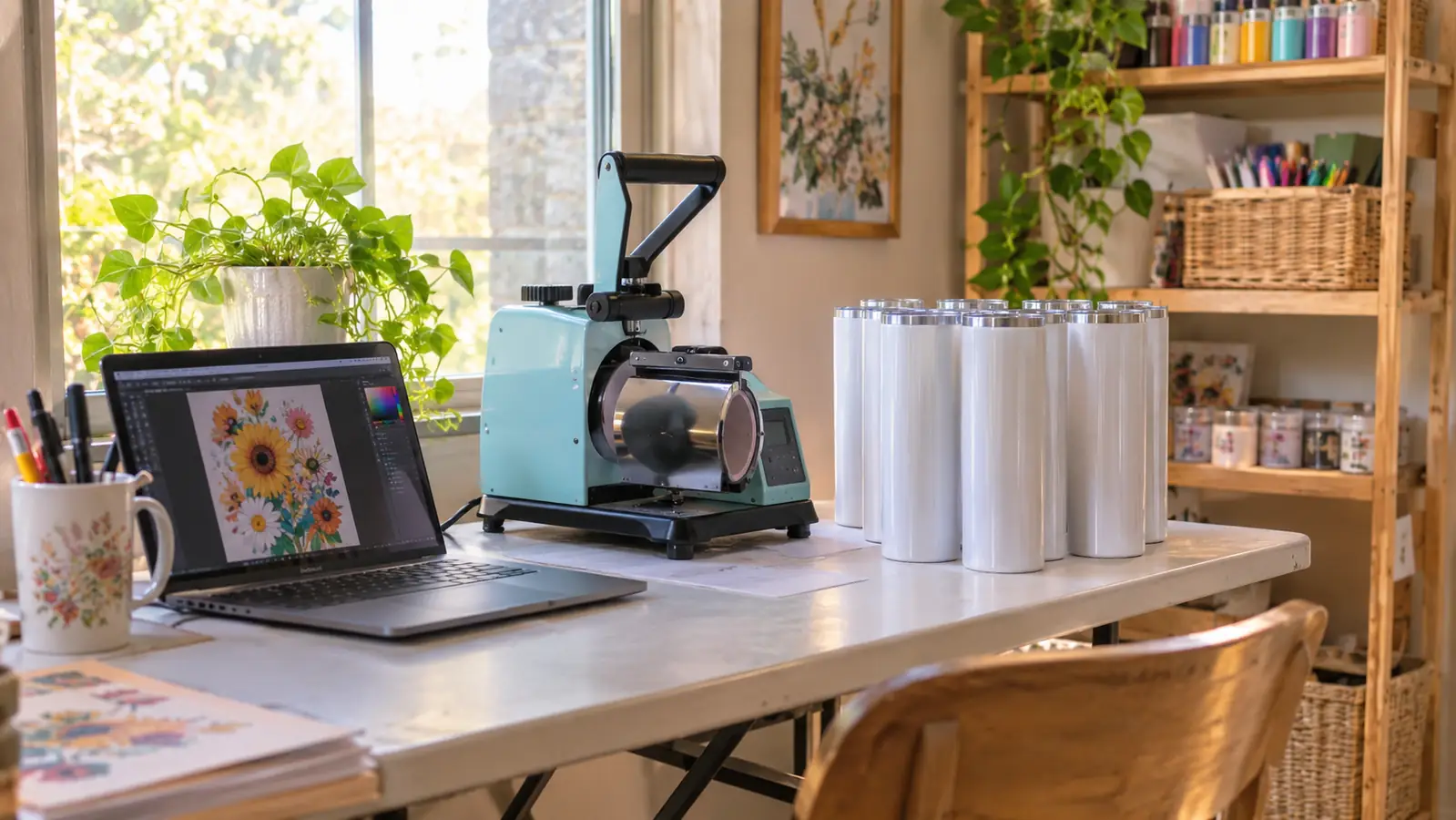
Wrapping a tumbler by hand is a two-handed job. You tape the print, you work the sleeve down over the blank, you worry at the wrinkles with your fingertips, and then you either wave a heat gun around or babysit a countertop oven until a timer goes off somewhere behind you. I did it that way from mid February through late April, and I got good enough at it to fool myself.
Then a Saturday in late April happened. Six tumblers for a friend's bridal party came out blurry with streaks running through the wrap, and the converted EcoTank clogged the same afternoon just to finish the job. The first week of May I bought the HTVRONT Auto Tumbler Heat Press, and I have not wrapped a tumbler by hand since. Here is what actually changed, in the order I noticed it.
The press that ended my sleeve-and-oven Saturdays
Runs 210 to 390 F, holds straight tumblers from 2.9 to 3.2 inches across, and releases the pad with one button when the cycle is done. Mine has run since the first week of May without a hiccup.
Amazon Check Today's Price on Amazon →You stop holding anything for two and a half minutes
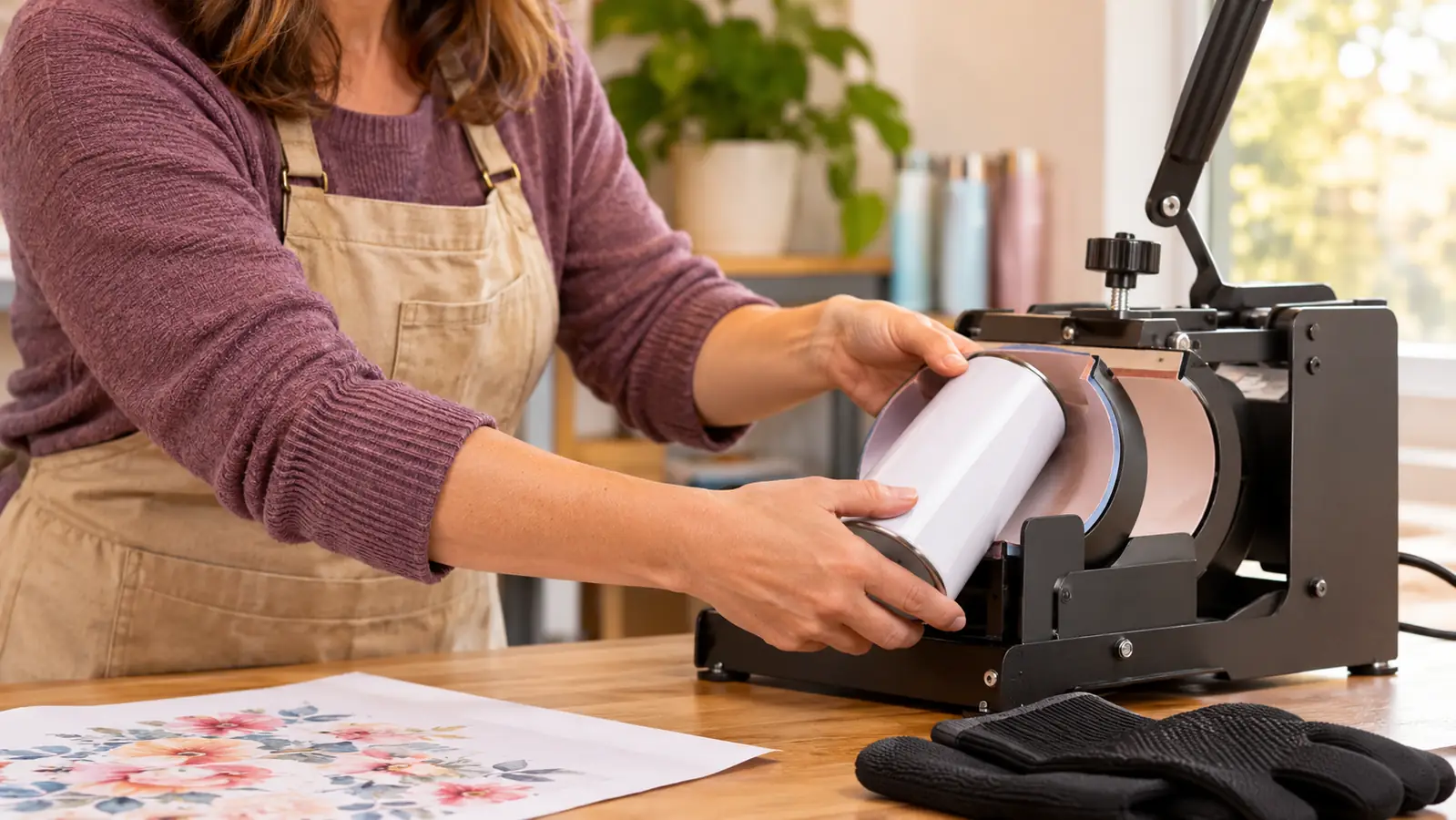
My old method needed both hands and all of my attention. One hand on the sleeve, one on the heat gun, or one holding the oven door while the timer ran down across the room. The press clamps and then it does the waiting for you. I set 365 F and 150 seconds for a 20 oz straight tumbler, walk away, and use those two and a half minutes to tape the next print or load a shirt on the 15x15. Nothing shifts, because the machine is holding it and I am not.
The clamp squeezes the same on tumbler one and tumbler ten
Hand pressure is never the same twice. You squeeze harder on the third tumbler than the first because your wrist is tired, and the wrap shows it. Auto clamping takes your wrist out of the equation. Same squeeze on tumbler one and tumbler ten, which is the reason the six tumblers I remade in May came out matching instead of close. If you have ever pulled a set out and found one that looked a shade lighter than the rest, that is usually pressure, not ink.
One button ends the cycle and hands the tumbler back to you
The R button halts the heating and releases the heat pad instantly. Small thing on paper, big difference in how a session feels. On the countertop oven I was guessing from across the room and pulling the door open at whatever the timer said, hot sleeve and all. Now the release is a decision I make with one finger, on purpose, when the cycle is actually finished.
It fits the 20 oz blanks I actually buy
It takes tumblers 2.9 to 3.2 inches across and 10 to 30 oz. My 20 oz straight sublimation tumblers sit in the middle of that range, which is why I rarely think about it anymore. The honest part: tapered tumblers do not sit right. I tried one and went back to straight blanks. Buy straight and this machine is boring in the best possible way.
600 watts means it shares the room with my printer
My 15x15 clamshell is 1800 watts and wants an outlet to itself. The HTVRONT tumbler press is 600 watts at 120 volts, so it runs off the same folding table outlet as the F170 without me doing breaker math in my head. In a spare bedroom with one usable circuit by the window, that is not a small deal. It is the difference between pressing tumblers tonight and pressing them after Gary moves a lamp.
It lives on the folding table, not the workbench
12.9 by 10.9 by 6.3 inches, a bit under 11 pounds. It sits on the folding table by the window where I crack the sash while pressing, next to the printer, and the workbench stays clear for flat work. Gary built that bench with his own hands and I am not handing it over to a machine that only handles drinkware.
No sleeve to line up and no gun to wave
Lining up a shrink sleeve is a small act of faith. You get it centered, you work the wrinkles out with your fingers, and you hope the oven does the rest. The press holds the print flat against the blank all the way around for the full cycle, edges included. My streaky batch in April was an edge problem. Edge problems go away when the pressure is even and nobody is guessing.
The temperature stays where you set it
The press runs 210 to 390 F and holds where you put it. My countertop oven swung enough that I kept a cheap infrared thermometer in the drawer and checked it between batches. I still check the clamshell that way, out of habit. The tumbler press I set to 365 F and trust, and it has not given me a reason to doubt it since May.
Remakes stop eating your Saturday
Nobody plans a remake. Mine was six bridal party tumblers and a whole Saturday gone, and the printer clogged the same afternoon just to finish the job. The first week of May I remade the set in one Saturday afternoon and every single one came out sharp. Whatever else this thing does, it took that afternoon off my calendar, and I would rather spend a Saturday weeding vinyl than remaking tumblers.
There is a one year warranty instead of three months
The HTVRONT press carries a one year warranty, and the listing gives you a support contact. My clamshell came with three months. For a machine that runs every week, that is the difference between a tool and a question mark. I have not had to call anyone, and I like knowing the option is sitting there.
What I'd Skip
Skip the bulk box of shrink sleeves, even though it looks like a bargain at the time. Once the press is doing the work, sleeves are just clutter in a drawer. Skip the heat gun for anything except vinyl. Skip buying a second press in your first month, because this one presses a single tumbler at a time and two machines do not fix that as well as batching your evenings does. And skip tapered blanks entirely. A diameter range says nothing about taper, and a tapered tumbler will not sit right in the clamp no matter how carefully you line it up.
What I would not skip is the press itself, if drinkware is more than an occasional thing for you. My old way worked just often enough to keep me doing it, right up until a Saturday in April proved it did not work reliably. The HTVRONT Auto Tumbler Heat Press is the one piece of equipment in my spare bedroom that I would replace the same week if it died.
365 degrees for 150 seconds, clamped, and I do not touch it again until the timer says so. That is the whole difference between a sharp tumbler and a streaky one.
If your tumblers come out streaky, change how the heat goes on
Straight 20 oz blanks, 365 F, 150 seconds, one button to release the pad. That is the routine I have run since May, and it is the reason my last batch matched.
Amazon Check Today's Price on Amazon →